current location : Home » categoires :
Why Is Your Polished Stone Surface Showing “Cloudiness” or Uneven Shine?
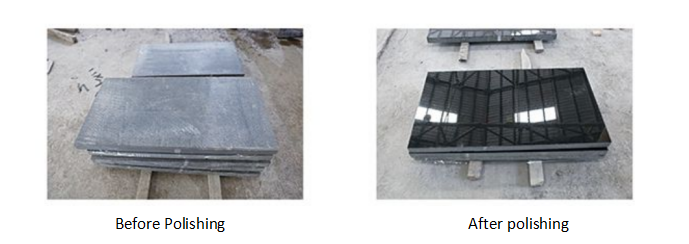
Why Is Your Polished Stone Surface Showing “Cloudiness” or Uneven Shine?
In high-end stone processing—whether you are producing kitchen countertops, tombstones, or architectural panels—surface finish is not just about aesthetics. A perfectly polished surface reflects craftsmanship, machine precision, and material quality.
Yet many manufacturers encounter a frustrating issue: cloudiness, haze, or uneven shine after polishing. Even when using advanced CNC machines and polishing lines, the final result may still fall short of expectations.
This article breaks down the real causes, practical solutions, and machine-level optimization strategies, based on actual production scenarios—helping both operators and buyers understand how to eliminate this issue at the source.
1. What Does “Cloudiness” in Stone Polishing Actually Mean?
“Cloudiness” typically refers to:
- A milky or hazy appearance on the surface
- Inconsistent gloss levels across different areas
- Visible swirl marks or dull patches under light reflection
- Real Production Scenario:
In a tombstone factory running continuous polishing for 10 hours per shift, operators noticed that black granite slabs showed uneven gloss—especially under LED inspection lights. The issue was not visible immediately after polishing, but became obvious after drying.
This indicates that surface defects are often hidden during wet processing but exposed after drying, which is a critical clue.
2. Main Causes of Uneven Shine (With Practical Analysis)
2.1 Abrasive Grit Sequence Problems
If polishing pads or abrasives are:
- Skipped (e.g., jumping from 400# to 1500#)
- Worn out unevenly
- Poor quality or inconsistent bonding
The surface will not be uniformly refined, causing micro-scratches that scatter light.
Comparison Insight:
- Proper sequence (e.g., 50# → 100# → 200# → 400# → 800# → 1500# → 3000#) ensures gradual scratch removal
- Incorrect sequence leads to residual scratches, resulting in haze
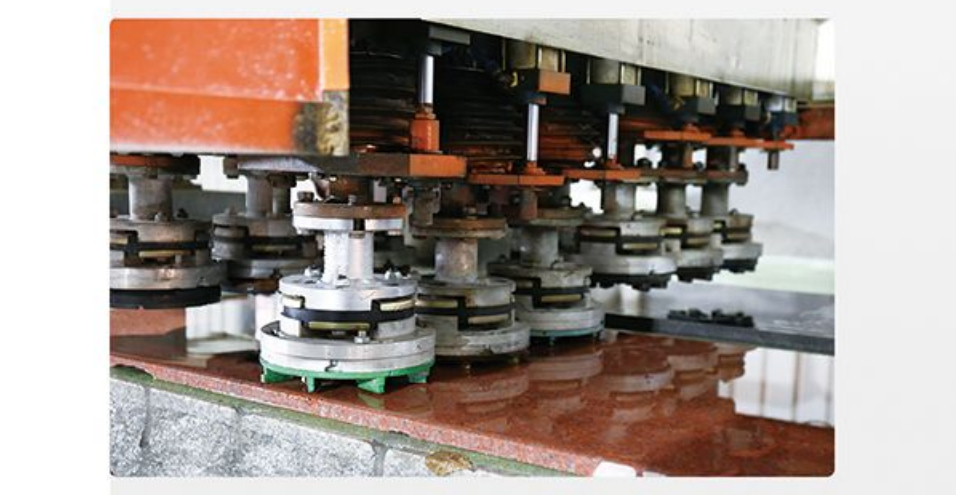
2.2 Inconsistent Pressure and Machine Calibration
Modern stone polishing machines rely heavily on:
- Stable pressure
- Even head distribution
- Accurate axis movement
If your machine:
- Has uneven pressure across polishing heads
- Shows vibration at high RPM
- Lacks precise calibration
You will get patchy gloss levels
Real Case: On a bridge polishing machine running at 2800 RPM, a slight imbalance in spindle pressure (±5%) resulted in visible gloss differences across a 2-meter slab.
2.3 Water Supply Issues (Often Overlooked)
Water is critical for:
- Cooling
- Debris removal
- Lubrication
Problems include:
- Insufficient water flow
- Uneven distribution across polishing heads
- Dirty or recycled water with particles
This causes localized overheating and micro-abrasion, leading to dull areas.
2.4 Stone Material Differences
Not all stones behave the same:
- Granite: Hard, requires more consistent polishing steps
- Marble: Softer, prone to over-polishing
- Quartz/artificial stone: Sensitive to heat and pressure
Even within the same slab, mineral composition variations can cause uneven reflection.
2.5 Operator Technique & Process Control
Even with advanced machines, human factors matter:
- Incorrect feed speed
- Skipping inspection steps
- Not replacing worn abrasives on time
In mass production, small mistakes amplify into visible defects.
3. How to Fix Cloudiness: Practical Solutions That Work
3.1 Optimize the Polishing Process
- Use a complete and gradual abrasive sequence
- Ensure each step fully removes previous scratches
- Maintain consistent polishing time per stage
Tip: Do not rush high-grit polishing—it cannot fix deep scratches
3.2 Upgrade or Adjust Your Machine Setup
From an equipment perspective:
- Use automatic pressure control systems
- Ensure spindle balance and vibration control
- Regularly calibrate multi-head stone polishing machines
Application Scenario:
In a factory producing high-gloss quartz countertops for export to the U.S., upgrading to a polishing line with automatic pressure compensation improved gloss consistency by over 20%.
3.3 Improve Water Management System
- Install independent water flow control per head
- Use clean, filtered water
- Monitor flow rate continuously
This is especially important in high-temperature environments (>35°C) where evaporation affects polishing stability.
3.4 Match Process to Material
| Material Type | Key Adjustment |
|---|---|
| Granite | Higher pressure + longer polishing time |
| Marble | Lower pressure + finer grit control |
| Quartz | Strict temperature control + stable speed |
3.5 Implement Quality Inspection Standards
- Use gloss meters (target: 85–100 GU depending on stone)
- Inspect under dry conditions and strong lighting
- Standardize inspection after each polishing stage
4. Supplier Comparison: Why Machine Quality Matters
When buyers compare suppliers, polishing quality is often the deciding factor.
Low-End Machines:
- Manual pressure adjustment
- Inconsistent spindle performance
- Higher defect rates
High-End Machines:
- CNC-controlled polishing paths
- Automatic pressure balancing
- Real-time monitoring systems
Result: High-end machines reduce cloudiness not by chance—but by process control and repeatability.
5. Frequently Asked Questions
Q1: Why does my stone look perfect when wet but cloudy when dry?
Because water temporarily fills micro-scratches. Once dry, light scattering reveals surface defects.
Q2: Can high-grit polishing remove cloudiness?
No. High-grit abrasives only refine the surface. The root cause is usually in earlier polishing stages.
Q3: How often should polishing pads be replaced?
In continuous production:
- Rough grits: every 2–3 days
- Fine grits: every 4–7 days
(Depends on material hardness and workload)
Q4: Is cloudiness caused by the machine or the operator?
Usually both. 70% process control + 30% operator execution.
6. Expert Insight: Preventing the Problem at the Source
From an engineering perspective, the best way to eliminate cloudiness is not re-polishing—but preventing defects during the first pass.
This requires:
- Stable machine structure
- Intelligent control systems
- Standardized operating procedures
Conclusion
Cloudiness or uneven shine is not a random defect—it is a system-level issue involving abrasives, machines, materials, and operators.
For stone processing companies aiming at high-end export markets, solving this problem is essential for:
- Reducing rework costs
- Improving customer satisfaction
- Strengthening brand credibility
If your production line still struggles with inconsistent polishing results, it may be time to re-evaluate both your process and equipment setup—because in today’s competitive market, surface quality is your strongest sales argument.
prev What Is CAD/CAM in Stone Processing
next Why Choose R22 Refrigerant for Flooded Screw Chillers?