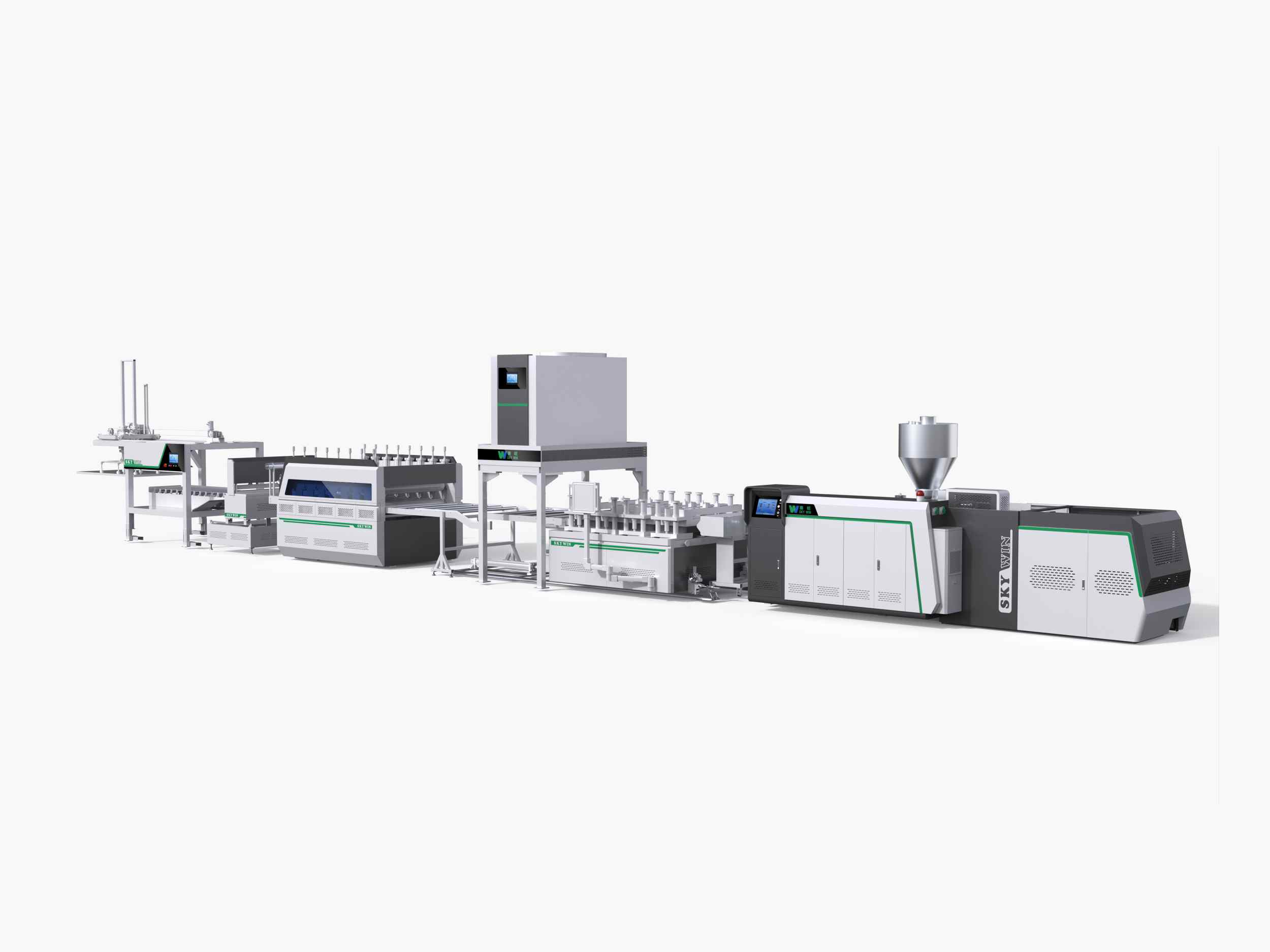
The output of an SPC flooring extrusion line depends on several factors, including extruder capacity, raw material formulation, sheet thickness, sheet width, processing temperature, cooling performance, and downstream equipment speed. A larger extruder can increase production capacity, but the entire line must operate in balance to achieve stable output without sacrificing sheet quality.
For SPC flooring manufacturers, actual production output is more important than the maximum capacity listed in a machine specification. If the extrusion system produces material faster than the calendering or cooling section can handle, the line may experience thickness variations, unstable sheet dimensions, or increased scrap. SKY WIN designs SPC flooring extrusion equipment with different capacity options to meet different manufacturing requirements.
What Determines the Output of an SPC Flooring Extrusion Line?
The output of an SPC flooring extrusion line is determined by the amount of material the equipment can process consistently while meeting the required product specifications. The main factors are extruder size, formulation, sheet dimensions, processing stability, cooling capacity, and the speed of downstream equipment.
For example, two factories using the same model of SPC flooring extrusion machine may achieve different production results if they use different formulations or produce sheets with different thicknesses. One factory may run a relatively thin sheet at a higher stable speed, while another may need to reduce its speed to maintain quality when producing a thicker core.
The following factors should be evaluated together when selecting equipment or troubleshooting low output:
- Extruder model, screw design, and drive capacity.
- Raw material formulation and feeding consistency.
- Sheet thickness and width.
- Temperature control and plasticization stability.
- Calendering, lamination, and cooling performance.
- Haul-off speed, cutting speed, and automation.
- Equipment maintenance, downtime, and material waste.
Extruder Size and Screw Design Affect Production Capacity
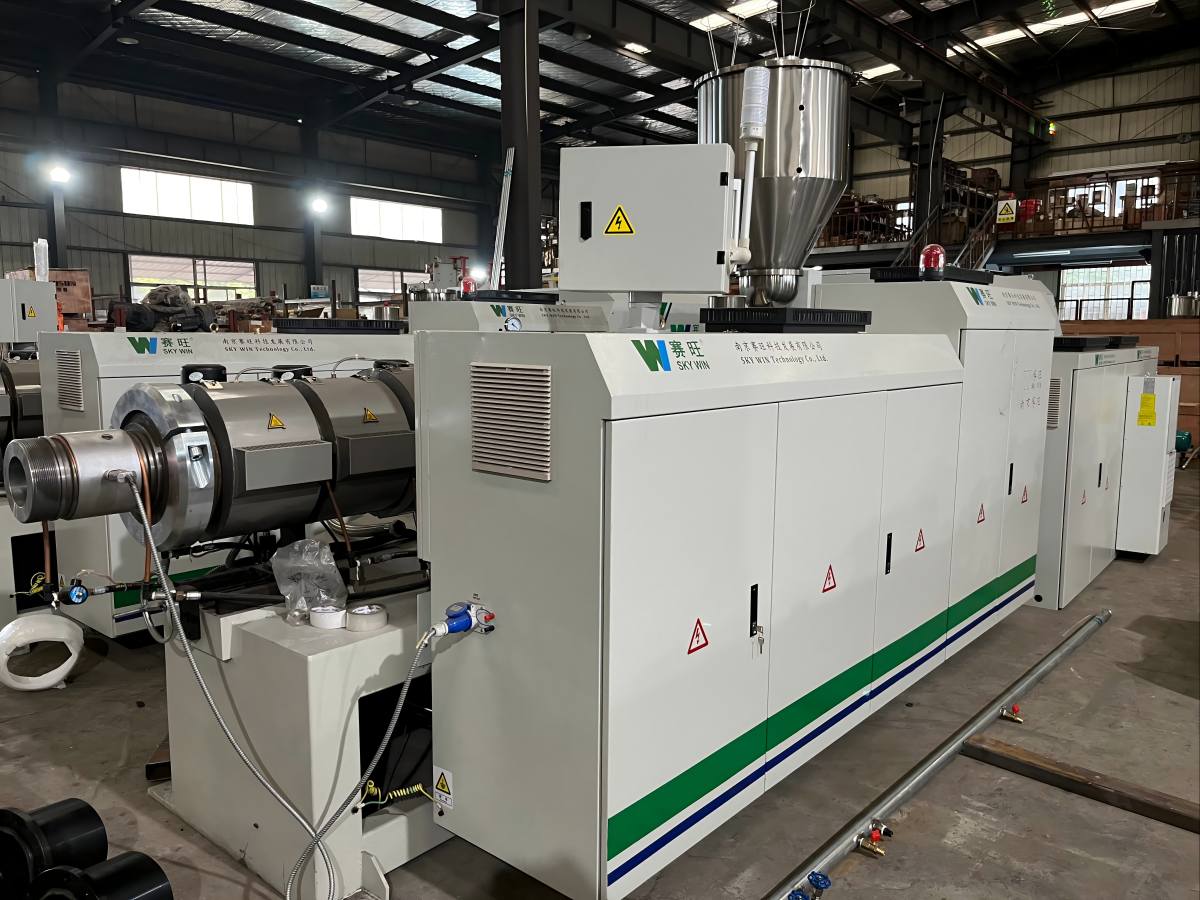
The extruder is one of the main factors affecting SPC flooring production output. Its size, screw configuration, motor capacity, and ability to process highly filled PVC compounds determine how much material can be plasticized and delivered to the die under stable conditions.
SPC flooring commonly uses PVC resin, calcium carbonate, stabilizers, and other additives. Because mineral filler makes up a substantial part of many SPC formulations, the extruder must be suitable for the material's processing characteristics rather than selected based on motor power alone.
A properly matched conical twin-screw extruder helps maintain consistent mixing, plasticization, and melt delivery. If the extruder is undersized for the required output, increasing its speed beyond a suitable operating range may lead to unstable processing, excessive wear, or inconsistent sheet quality.
When comparing machines, manufacturers should evaluate screw design, torque, motor power, temperature control, wear resistance, and the intended formulation. These factors help determine whether the equipment can maintain the required output during continuous production.
SKY WIN's SPC/PVC Flooring Sheet Extrusion Line uses a conical twin-screw extruder and offers different model configurations for different production requirements.
Raw Material Formulation Influences Extrusion Speed
The raw material formulation affects how easily the SPC compound can be mixed, plasticized, and extruded. Differences in PVC resin characteristics, calcium carbonate loading, stabilizers, lubricants, and other additives can change the material's flow behavior and processing window.
A formulation that is difficult to plasticize or feed consistently may limit output even when the extruder has sufficient rated capacity. Variations in raw material quality can also cause unstable feeding, inconsistent melt flow, and changes in the finished sheet's surface or dimensions.
To maintain stable production, manufacturers should:
- Keep the formulation consistent between production batches.
- Use a mixing process that distributes fillers and additives evenly.
- Control material moisture and storage conditions where relevant.
- Check feeding stability and avoid unnecessary interruptions.
- Adjust processing conditions when the formulation changes.
Increasing filler content or changing additives should not be treated as a simple way to reduce material cost. The revised formulation must be tested for processing stability, finished product requirements, and its effect on achievable output.
Sheet Thickness and Width Change the Required Output
SPC flooring sheet thickness and width directly affect the amount of material required per unit of production time. At the same line speed, a wider or thicker sheet generally requires more material than a narrower or thinner sheet.
This means that rated output in kilograms per hour should not be confused with the number of boards or square meters produced per hour. Manufacturers need to consider both material throughput and finished product dimensions when estimating production capacity.
For example, a line producing a thicker SPC core may need to run more slowly to maintain uniform thickness, stable cooling, and the required surface quality. A thinner product may allow a higher line speed, provided the extrusion and downstream systems remain stable.
Before selecting an SPC flooring production line, specify the target sheet thickness, width, formulation, and required output. This allows the equipment supplier to evaluate the appropriate extruder model and downstream configuration.
Temperature Control and Plasticization Stability Matter
Temperature control affects the plasticization of the SPC compound and the stability of the extrusion process. If the material is not properly plasticized, the sheet may show inconsistent surface quality or thickness. Excessive heat can also damage heat-sensitive PVC compounds.
Manufacturers should monitor barrel temperatures, melt conditions, die temperature, and roller temperatures according to the formulation and equipment design. The correct settings depend on the material and operating conditions, so there is no single temperature profile suitable for every SPC flooring line.
Stable temperature control helps the extruder deliver a more consistent melt to the die. This supports uniform sheet formation and reduces the need for frequent adjustments that interrupt production.
If output suddenly decreases, check whether the temperature settings have changed, whether the feeding system is stable, and whether the material formulation or equipment condition has affected plasticization before increasing screw speed.
Calendering and Cooling Capacity Can Limit Line Output
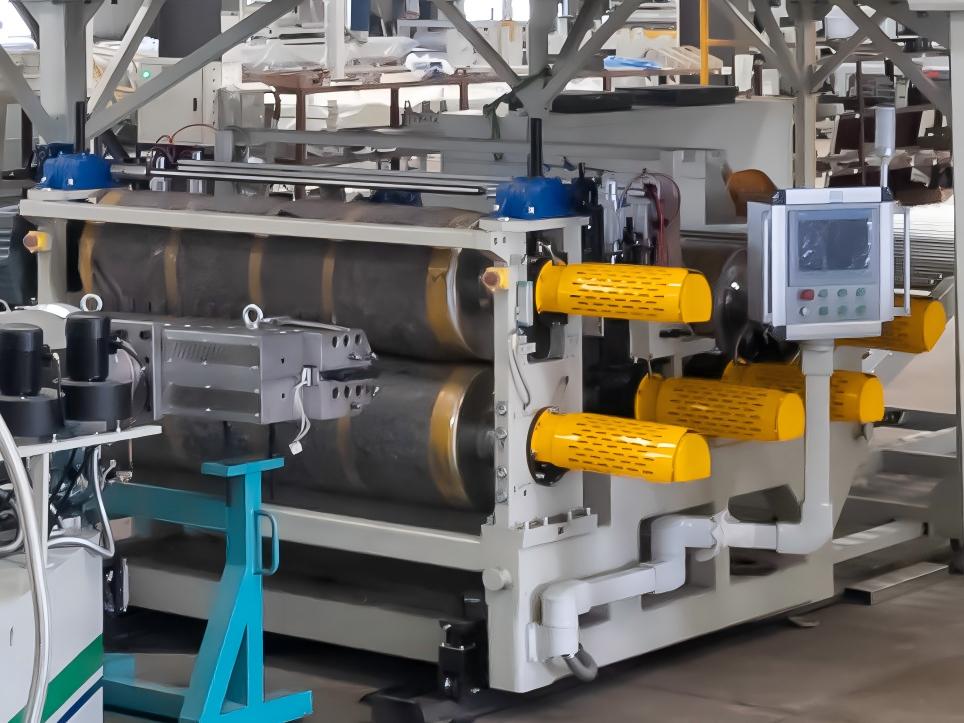
A high-capacity extruder cannot deliver its full practical output if the calendering and cooling sections cannot process the material at the same rate. These downstream systems must be matched to the amount of hot SPC sheet leaving the die.
The calendering system controls sheet thickness, flatness, and surface characteristics. If roller settings are unstable or the system cannot handle the incoming material flow, increasing extrusion output may create thickness variations or surface defects.
Cooling is equally important. The sheet needs sufficient and reasonably uniform cooling before it proceeds to trimming and cutting. If the cooling section cannot remove heat quickly enough, the operator may need to reduce line speed to avoid warping or dimensional instability.
SKY WIN identifies its advanced cooling system as an important feature of its higher-output SPC flooring equipment. When comparing production lines, manufacturers should assess cooling capacity alongside extruder specifications rather than treating it as a secondary component.
Lamination, Haul-Off, and Cutting Must Keep Pace
For production lines that include online lamination, embossing, and cutting, each stage must operate in coordination with the extrusion process. The line's practical output is affected by the slowest stage that must handle the continuous sheet.
Lamination speed and temperature need to match the core sheet and surface materials. Poor bonding, bubbles, or inconsistent embossing can force operators to reduce speed or reject finished material. Haul-off equipment must pull the sheet consistently, while the cutting system must maintain the required cutting length without interrupting continuous production.
When output is lower than expected, check whether the bottleneck is actually the extruder or a downstream unit. The problem may be related to cooling, film feeding, roller settings, haul-off synchronization, or cutter operation.
SKY WIN's PVC Flooring SPC/LVT Sheet Extrusion Line is another configuration to review when comparing flooring sheet production equipment and processing requirements.
SKY WIN SPC Flooring Extrusion Line Output Specifications
SKY WIN publishes several SWDB5 series configurations for SPC/PVC flooring sheet production. The listed models cover different extruder sizes and rated output ranges, allowing manufacturers to compare equipment according to their target production volume.
| Machine model | Rated output | Sheet thickness | Sheet width |
|---|---|---|---|
| SWDB5-2 | 600–800 kg/h | 1.5–7 mm | 970–1220 mm |
| SWDB5-3 | 1100–1400 kg/h | 1.5–7 mm | 970–1220 mm |
| SWDB5-3-2 | 1500–1800 kg/h | 1.5–7 mm | 970–1220 mm |
| SWDB5-3--3 | 2000–2500 kg/h | 1.5–7 mm | 970–1220 mm |
| SWDB5-4 | 2500–2900 kg/h | 1.5–7 mm | 970–1220 mm |
| SWDB5-5 | 2900–3300 kg/h | 1.5–7 mm | 970–1220 mm |
| SWDB5-6 | 3000–4000 kg/h | 1.5–7 mm | 970–1220 mm |
These figures are the manufacturer's published specifications. They should be treated as rated output ranges, not guaranteed production results for every formulation or sheet specification. Actual output depends on the product structure, operating conditions, equipment configuration, and quality requirements.
For an accurate comparison, ask the supplier to confirm the expected output for your target sheet thickness, width, formulation, and operating schedule.
Maintenance and Production Downtime Affect Actual Output
Rated output describes the machine's production capability under specified conditions, but actual daily or monthly output also depends on operating time. Equipment stoppages, cleaning, material changes, start-up adjustments, and maintenance all reduce the amount of saleable material produced.
Regular inspection of the screws, barrels, bearings, drive system, cooling equipment, rollers, and cutting units can help identify problems before they cause longer interruptions. Operators should also monitor abnormal noise, vibration, temperature changes, unstable feeding, and recurring sheet defects.
Manufacturers should distinguish between rated capacity, actual running output, and saleable output. A line may run at a high material throughput but still produce less saleable flooring if scrap rates or downtime are high.
Tracking hourly output, downtime, material waste, and product quality gives factory managers a clearer picture of where improvements are needed.
How to Improve the Output of an SPC Flooring Extrusion Line
Improving output starts with identifying the actual bottleneck. Increasing the extruder speed without checking the formulation, calendering, cooling, and downstream equipment may increase defects rather than saleable production.
Practical steps include:
- Confirm the target product specifications: Define the required sheet thickness, width, formulation, and surface structure.
- Optimize the material formulation: Maintain consistent raw materials and mixing conditions.
- Stabilize extrusion: Match screw speed, feeding rate, and temperature settings to the compound.
- Balance the entire line: Ensure calendering, cooling, haul-off, and cutting can handle the target throughput.
- Reduce avoidable downtime: Maintain equipment and standardize start-up and changeover procedures.
- Measure saleable output: Track product quality and scrap alongside kilograms processed per hour.
If the current line consistently falls short of demand, evaluate whether the issue is a process bottleneck or insufficient machine capacity. SKY WIN's SPC flooring extrusion equipment offers multiple model options, allowing manufacturers to discuss capacity requirements and suitable configurations with the supplier.
Frequently Asked Questions About SPC Flooring Extrusion Line Output
What factors affect the output of an SPC flooring extrusion line?
The main factors are extruder size and screw design, raw material formulation, sheet thickness and width, temperature control, calendering performance, cooling capacity, downstream line speed, and equipment downtime.
What is the maximum output of an SPC flooring extrusion line?
Output depends on the machine model and production conditions. SKY WIN lists rated output ranges from 600–800 kg/h for the SWDB5-2 to 3000–4000 kg/h for the SWDB5-6. Actual output should be confirmed for the intended formulation and sheet specifications.
Does a larger extruder always produce more SPC flooring?
A larger extruder can provide greater material throughput, but total production is also limited by calendering, cooling, lamination, haul-off, and cutting capacity. The complete line must be balanced to achieve higher saleable output.
How does sheet thickness affect SPC flooring production output?
Thicker sheets require more material per unit of sheet area. Depending on the extruder and downstream equipment, producing thicker sheets may require a lower line speed to maintain stable dimensions and product quality.
Can raw material formulation reduce extrusion output?
Yes. Changes in PVC resin, calcium carbonate loading, additives, or material consistency can affect feeding, plasticization, melt flow, and processing stability. The formulation and operating settings should be evaluated together.
Why does cooling capacity affect SPC flooring line output?
The cooling system must remove heat from the continuous sheet before downstream handling and cutting. If cooling is insufficient for the incoming material flow, the line may need to run more slowly to prevent warping and dimensional instability.
How can I calculate actual SPC flooring production capacity?
Start with the actual material throughput in kilograms per hour, then account for operating hours, downtime, start-up waste, and rejected material. For square-meter output, also consider sheet width, thickness, density, and the final product dimensions.
How can I choose the right SPC flooring extrusion line for my factory?
Define your target output, formulation, sheet thickness, sheet width, and surface-finishing requirements. Ask the supplier to confirm the suitable model and achievable output under those conditions, including the capacity of the calendering, cooling, and cutting systems.
SKY WIN provides SPC flooring extrusion equipment in multiple configurations. Sharing your target product specifications and production goals will help the engineering team assess a suitable line for your factory.