The output of a PVC wall panel extrusion line depends on more than the extruder's rated capacity. Raw material formulation, screw design, panel width and thickness, processing temperature, calibration, cooling, haul-off speed, and downstream cutting all influence how many finished panels a factory can produce per hour.
For manufacturers planning to increase production, the key is to identify which part of the line limits actual output. Increasing screw speed may raise material throughput, but if the cooling section cannot stabilize the panels or the surface quality begins to deteriorate, the additional output may not be saleable.
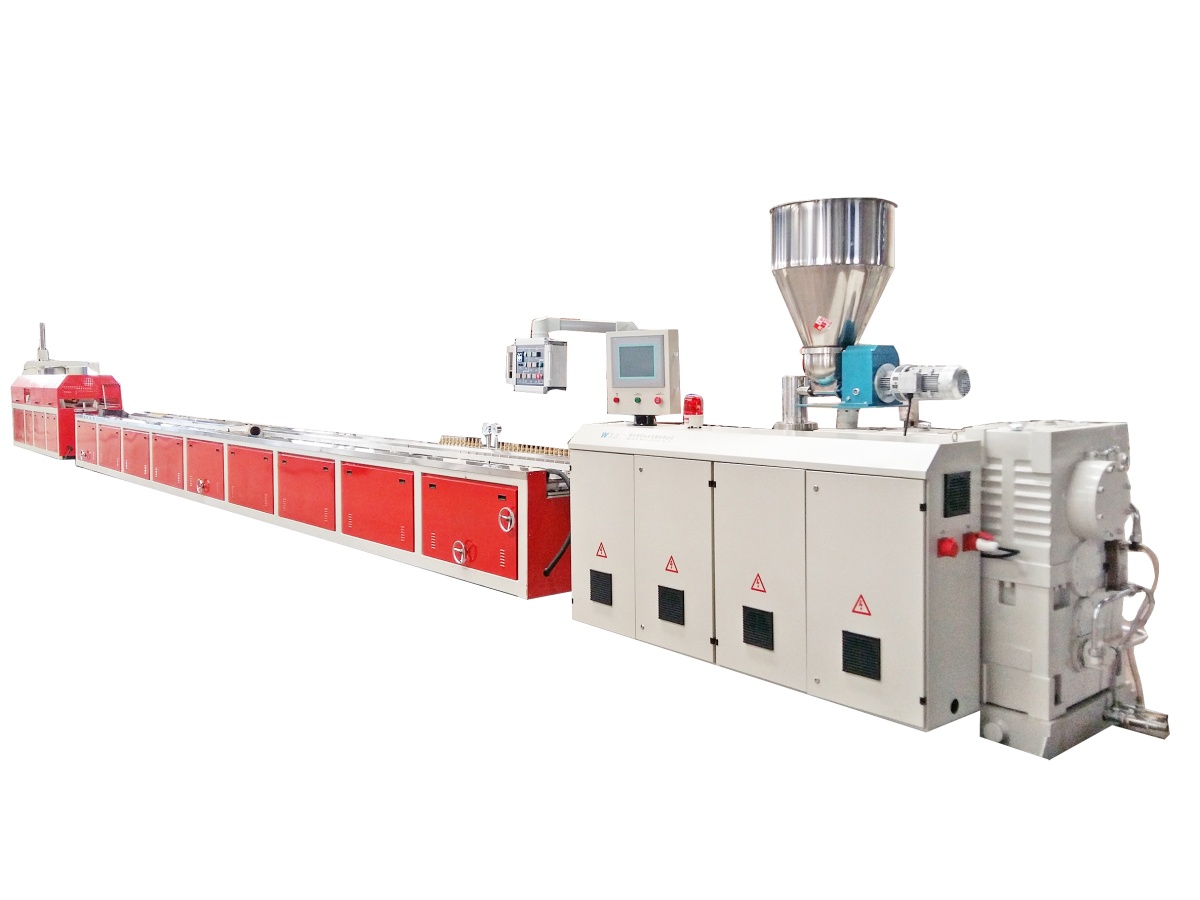
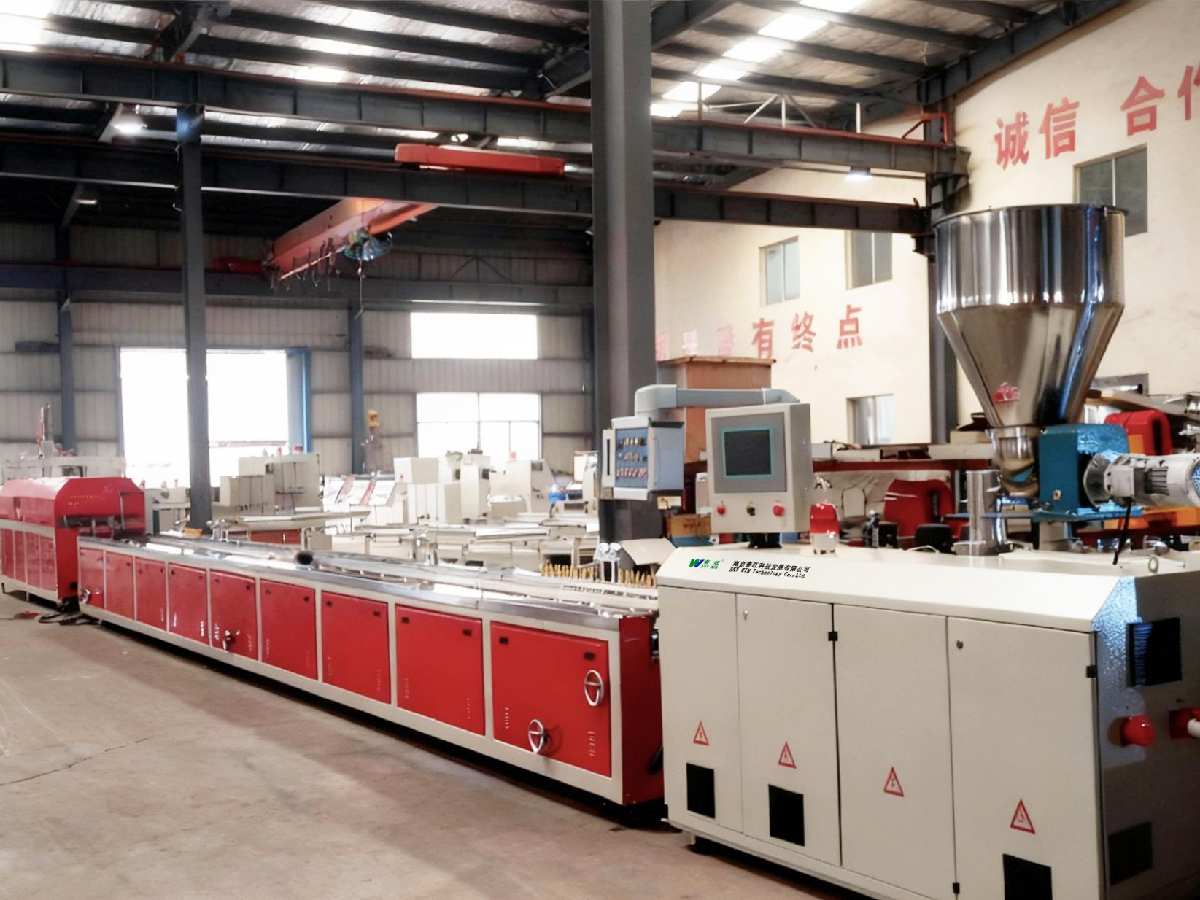
SKY WIN provides extrusion equipment for PVC and WPC wall panels, profiles, and related plastic products. Its WPC/PVC Inside Wall Panel Extrusion Line is designed for decorative interior panels, with configuration options that can be evaluated according to the required panel dimensions, material, and production target.
What Determines the Output of a PVC Wall Panel Extrusion Line?
The actual output of a PVC wall panel extrusion line is determined by the combined performance of the material feeding system, extruder, forming die, calibration and cooling equipment, haul-off unit, and cutting system. The line can only maintain stable production when these components operate within compatible processing conditions.
For example, a powerful extruder may process material quickly, but the line may still be limited by slow cooling, unstable panel dimensions, or a cutting unit that cannot keep pace with the extrusion speed. Manufacturers should therefore evaluate the entire production process rather than selecting equipment based on motor power alone.
The most important factors are:
- Raw material formulation and feeding consistency.
- Extruder type, screw design, and plasticizing performance.
- Panel width, thickness, cross-sectional structure, and weight per meter.
- Processing temperature and melt stability.
- Die design, calibration accuracy, and cooling capacity.
- Haul-off speed, cutting efficiency, and downstream handling.
- Equipment downtime, startup waste, and finished-product rejection rate.
Raw Material Formulation and Feeding Consistency
Raw material formulation has a direct influence on extrusion stability and production output. PVC wall panel compounds may contain PVC resin, stabilizers, lubricants, processing aids, calcium carbonate, pigments, and other additives. WPC panels may also contain wood flour or other plant-based fibers.
Changes in formulation can affect melt viscosity, material flow, fusion behavior, thermal stability, and the mechanical properties of the finished panel. A formulation with excessive filler, unsuitable lubrication, or inconsistent raw material quality may require different processing conditions and can make stable extrusion more difficult.
Feeding consistency is equally important. Fluctuations in the amount of material entering the extruder can lead to variations in panel weight, thickness, and surface quality. Poorly controlled mixing or inconsistent moisture conditions in wood-filled compounds may also affect processing stability.
To improve output, manufacturers should maintain consistent material batches, use an appropriate mixing and feeding process, and monitor material consumption during production. Formulation changes should be tested systematically rather than compensated for by continuously increasing the extruder speed.
Extruder Design and Screw Performance
The extruder determines how effectively the compound is conveyed, mixed, plasticized, and delivered to the die. Screw geometry, screw diameter, rotational speed, drive capacity, and temperature control all influence the amount of material that can be processed consistently.
Conical twin-screw extruders are widely used in rigid PVC profile and wall panel production. Depending on the formulation and machine configuration, parallel twin-screw designs may also be suitable. The correct choice depends on the material, product structure, required output, and processing conditions.
When evaluating an extrusion machine, buyers should check:
- Plasticizing capacity: Can the extruder process the required formulation consistently at the target throughput?
- Screw configuration: Is the screw design appropriate for the material and panel structure?
- Temperature control: Can the machine maintain stable processing conditions without excessive heat buildup?
- Drive performance: Can the motor and drive system support the intended production conditions?
- Wear resistance: Are the screw and barrel suitable for the formulation, particularly when abrasive fillers are used?
Increasing screw speed may improve throughput when the machine has sufficient processing capacity. However, excessive speed can cause overheating, unstable material flow, poor surface quality, or dimensional variation. The best operating point is the highest sustainable output that still meets the required product specifications.
Panel Width, Thickness, and Cross-Sectional Structure
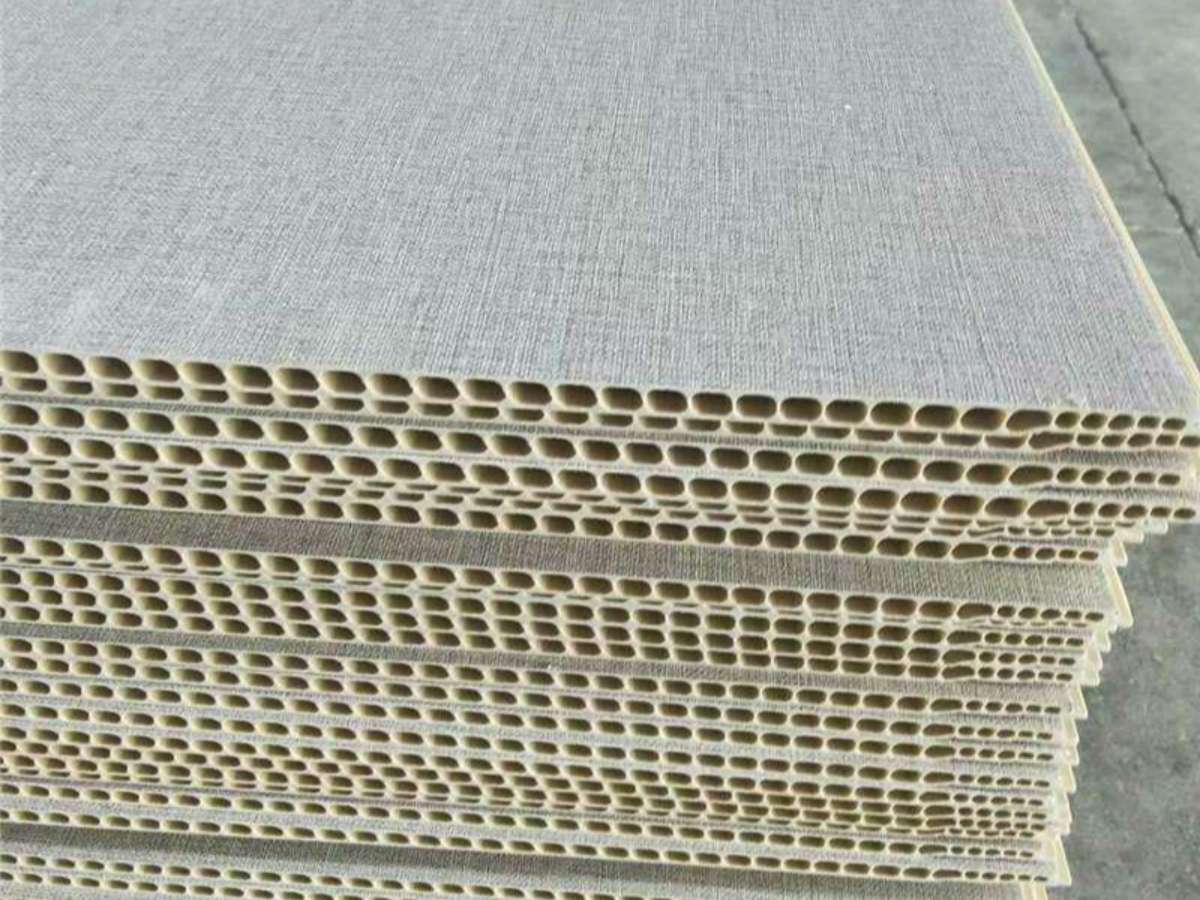
Panel dimensions are among the most important factors affecting output. Wider or thicker panels generally require more material per meter of finished product, while hollow profiles, solid panels, and panels with different internal structures may have substantially different material requirements.
This means two production lines running at the same haul-off speed may produce very different outputs when measured in kilograms per hour.
For example, a narrow hollow wall panel may use less material per meter than a wide, thick panel. The lighter panel may therefore achieve a higher linear output at the same mass throughput, provided the line can maintain dimensional accuracy and surface quality.
Manufacturers should specify the finished panel's width, thickness, cross-sectional drawing, and target weight per meter when discussing production capacity with a supplier. These details help determine whether the proposed extruder, die, calibration equipment, and cooling system can meet the production target.
Changing panel dimensions may also require die adjustments, calibration changes, and process optimization. A line designed for one panel profile should not automatically be assumed to deliver the same output with a different profile.
Processing Temperature and Melt Stability
PVC is sensitive to processing conditions, so temperature control is important for both product quality and production efficiency. The material must be processed within a suitable temperature range for the specific formulation and equipment configuration.
If temperatures are too low, the compound may not plasticize adequately, potentially increasing resistance to flow and causing surface defects. If temperatures are too high or the material remains exposed to excessive heat for too long, thermal degradation may occur.
Unstable temperature conditions can contribute to uneven surfaces, inconsistent dimensions, color changes, or fluctuations in output. Operators should monitor the temperature zones, actual material behavior, motor load, and finished-panel quality together rather than relying on a single displayed temperature.
To maintain stable production, manufacturers should establish a repeatable startup procedure, allow the line to reach suitable operating conditions, and document the settings associated with acceptable product quality. Changes to screw speed or formulation should be accompanied by appropriate adjustments to the process.
Die Design and Calibration Accuracy
The forming die determines the panel's cross-sectional shape and distributes the material across the required profile. Poor flow distribution, an unsuitable die design, or incorrect die settings can cause uneven wall thickness, inconsistent dimensions, or surface defects.
Calibration equipment helps establish the panel's final geometry while the material cools. If calibration is unstable, the panel may deform, vary in width, or fail to meet dimensional tolerances. Operators may then need to reduce line speed to maintain acceptable quality.
When investigating an output problem, check whether the die is suitable for the intended profile, whether material flow is balanced, and whether calibration settings are repeatable. A die that is correctly matched to the product can help the factory maintain a higher stable output without increasing the rejection rate.
For manufacturers producing different panel designs, the time required for die changes, calibration adjustments, and startup stabilization should also be included in production planning. Frequent product changes can reduce average daily output even when the line performs well during continuous runs.
Cooling Capacity and Haul-Off Speed
Cooling and haul-off systems often determine how quickly a newly extruded panel can move through the line without losing dimensional stability. A panel must have sufficient strength and stability before it is pulled, cut, stacked, or transferred to the next operation.
If cooling is insufficient, the panel may deform after leaving the calibration section. Operators may need to reduce the line speed or adjust the cooling conditions to prevent warping and dimensional variation.
The haul-off unit must also pull the panel at a consistent speed. If the pulling force or speed is unstable, the panel may stretch, distort, or develop inconsistent dimensions. The cutting unit must be synchronized with the line to avoid interruptions and incorrect finished lengths.
When troubleshooting low output, manufacturers should examine the entire sequence from extrusion through cooling and cutting. Increasing the extruder's material throughput will not solve the problem if downstream equipment cannot handle the additional production.
Automation and Downstream Processing Efficiency
Automation can improve average production output by reducing manual handling, stabilizing operating conditions, and minimizing interruptions. Depending on the product and factory requirements, a PVC wall panel line may incorporate automatic feeding, PLC-based controls, synchronized haul-off, automatic cutting, stacking, and optional surface treatment.
SKY WIN's published range also includes a PVC Ceiling Profile Extrusion Line, which illustrates how extrusion equipment can be configured for related PVC decorative profiles. The appropriate machine must still be selected according to the actual panel shape, dimensions, and manufacturing requirements.
For an existing production line, review how often operators must stop the machine to adjust the cutting system, remove finished panels, clean equipment, or correct product defects. These interruptions can have a significant effect on total output over a full shift.
Automation is most valuable when the equipment works as a coordinated system. A faster extruder alone will not increase saleable production if cutting, stacking, or surface finishing becomes the new bottleneck.
How to Calculate the Actual Output of a PVC Wall Panel Line
Manufacturers should distinguish between rated capacity, instantaneous production rate, and saleable output. Rated capacity describes the supplier's stated machine capability under specified conditions, while saleable output reflects the quantity of finished panels that pass the factory's quality checks.
For a continuous production run, the basic mass-output calculation is:
Output (kg/h) = Total finished product weight (kg) ÷ Production time (hours)
For example, if a line produces 1,200 kg of accepted panels over 8 hours, its average saleable output is 150 kg/h. This is an illustrative calculation, not a specification or guaranteed capacity for a particular SKY WIN machine.
To understand operating performance more fully, record:
- Total production time and actual running time.
- Total material input and accepted product weight.
- Startup scrap and rejected panels.
- Downtime caused by adjustments, maintenance, or downstream bottlenecks.
- Panel dimensions, weight per meter, and quality inspection results.
These measurements help identify whether low output is caused by limited extrusion capacity, slow downstream equipment, excessive scrap, or frequent stoppages. They also provide a more reliable basis for comparing different machine configurations.
How to Increase Output Without Sacrificing Panel Quality
Increasing output should begin with identifying the actual production bottleneck. Raising the speed of every machine component at the same time can make it difficult to determine which change improves performance and which creates new quality problems.
A practical improvement process includes the following steps:
- Establish a baseline: Record current output, scrap rate, downtime, panel dimensions, and operating settings.
- Check material consistency: Confirm the formulation, mixing quality, and feeding stability.
- Identify the bottleneck: Determine whether the extruder, die, cooling section, haul-off, or cutting unit limits production.
- Adjust one variable at a time: Make controlled changes to operating conditions and record the results.
- Verify product quality: Check dimensions, surface finish, profile structure, and mechanical requirements after each adjustment.
- Calculate saleable output: Compare accepted product weight rather than relying only on machine speed.
If the existing line consistently operates near its practical limits, a different screw configuration, larger-capacity extruder, improved cooling system, or more automated downstream equipment may be necessary. The required investment should be based on measured production limitations and the expected increase in saleable output.
What Should Buyers Confirm Before Ordering a Wall Panel Extrusion Line?
Before purchasing a new line, buyers should provide the supplier with a complete description of the intended product and factory requirements. This helps the engineering team recommend equipment that matches the required output rather than an assumed production target.
Prepare the following information before requesting a quotation:
- Material type and formulation, including whether the product contains wood fiber.
- Panel width, thickness, cross-sectional drawing, and target weight per meter.
- Required output in kilograms per hour or finished panels per shift.
- Surface requirements, including lamination, printing, or hot stamping.
- Factory power supply, cooling water, available floor space, and labor arrangements.
- Expected changeover frequency, maintenance needs, and automation requirements.
Ask the supplier to clarify the conditions under which the quoted output can be achieved. Where possible, agree on a production acceptance test covering material, dimensions, operating time, product quality, and the method used to measure accepted output.
Frequently Asked Questions About PVC Wall Panel Extrusion Output
What is the main factor affecting PVC wall panel extrusion output?
Output depends on the combined performance of the extruder, raw material formulation, panel dimensions, die, cooling system, haul-off, and cutting equipment. The actual production rate is usually limited by the component that cannot maintain the required speed and quality.
Does increasing screw speed always increase output?
No. Increasing screw speed can raise material throughput when the extruder and downstream equipment have sufficient capacity. Excessive speed may cause overheating, unstable flow, poor surface quality, or dimensional variation, reducing the amount of saleable product.
How does panel thickness affect production capacity?
Thicker panels generally require more material per meter, so the line may produce fewer meters per hour at the same mass throughput. The actual result depends on the panel's cross-sectional structure, material formulation, and equipment configuration.
Why can a high-capacity extruder still produce a low output?
Insufficient cooling, unstable calibration, slow cutting, inconsistent feeding, frequent adjustments, or high rejection rates can limit the final output even when the extruder itself has sufficient capacity.
How can I calculate the actual output of a PVC wall panel extrusion line?
Divide the total weight of accepted finished panels by the production time in hours. For a complete performance assessment, also record downtime, startup waste, rejected panels, and total material input.
What information is needed to select a suitable PVC wall panel extrusion line?
Provide the material formulation, panel width and thickness, cross-sectional drawing, target weight per meter, required output, surface treatment requirements, and factory conditions. These details help the supplier assess the extruder, die, cooling system, and downstream equipment as a complete line.