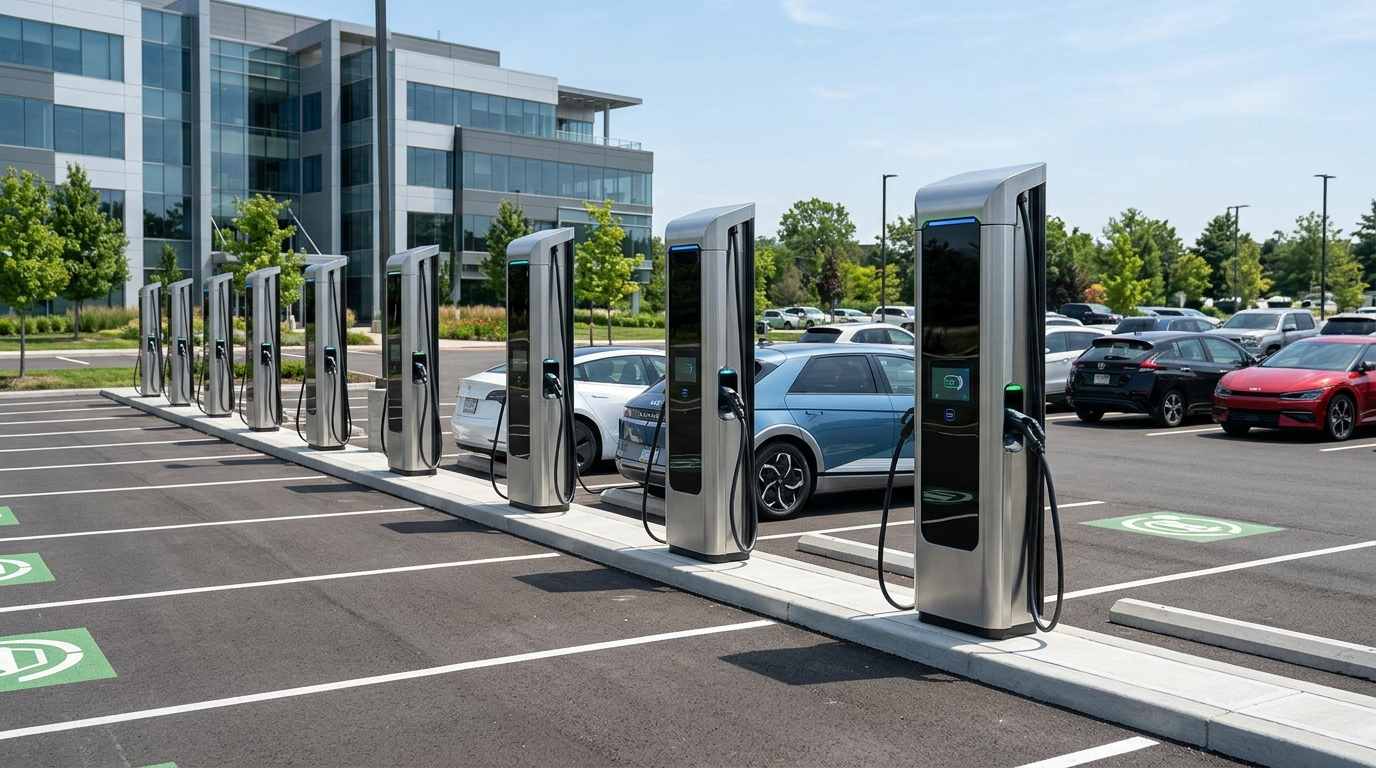
The global transition to electric mobility is driving an unprecedented expansion of charging networks. From urban commercial parking lots to remote highway rest stops, the deployment of Level 2 and DC Fast Chargers (DCFC) is accelerating rapidly. However, the success and reliability of this infrastructure rely heavily on the physical structures that house the advanced power electronics. This is exactly where industrial sheet metal fabrication plays a fundamental role.
An EV charger is essentially a high-voltage computer exposed to the harsh elements 24/7. Protecting these expensive internal components from unpredictable weather, extreme temperature fluctuations, and public interaction requires highly engineered metal packaging. The shift toward robust, custom-fabricated metal enclosures has become a critical standard for network operators aiming for maximum uptime and long-term ROI. Let’s explore the critical role of precision fabrication in the EV charging sector.
Weatherproofing and Environmental Protection
Outdoor charging stations face constant exposure to driving rain, snowstorms, coastal salt spray, and intense UV radiation. The primary function of any EV charger housing is to provide an impermeable barrier against these environmental threats. Fabricators achieve this by engineering chassis that meet stringent NEMA 3R, NEMA 4X, or IP65 ingress protection standards.
To ensure moisture and microscopic dust cannot penetrate the cabinet, absolute precision is required. CNC laser cutting and automated press brake bending guarantee the dimensional accuracy needed for tight gasket seals and overlapping rain gutters. Additionally, utilizing base materials like galvanized steel or aluminum to manufacture Outdoor Electrical Cabinets, followed by a UV-resistant powder coating, prevents rust and corrosion over a 10-to-15-year lifecycle.
Thermal Management for High-Power Output
DC Fast Chargers can deliver anywhere from 50kW to over 350kW of power directly to a vehicle's battery. This rapid power conversion generates a massive amount of internal heat. If the thermal management system fails, the charger will automatically throttle its output speed (frustrating drivers) or shut down entirely to prevent a fire hazard.
The metal enclosure acts as the first line of defense in thermal regulation. Experienced fabricators design Custom EV Charger Enclosures with stamped ventilation louvers, precise cutouts for active cooling fans, and specialized internal brackets to support liquid cooling modules. The metal casing itself is often engineered to act as a passive heat sink, efficiently dissipating internal temperatures into the surrounding air without compromising the IP rating.
Structural Durability and Vandalism Resistance
Charging stations are installed in public, highly trafficked, and sometimes unsupervised areas. They are highly vulnerable to accidental impacts from vehicles, shopping carts, and intentional vandalism. Thin-gauge housings or plastic shells simply cannot survive these demanding urban environments.
Professional fabricators utilize heavy-gauge carbon steel or reinforced aluminum to construct impact-resistant structures, often engineered to meet IK10 impact ratings. To deter vandalism and protect the expensive copper cables and payment terminals inside, the fabrication process incorporates hidden internal hinges, multi-point locking mechanisms, and flush-mounted designs that cannot be easily pried open with standard tools.
Modularity for Scalable Networks
The EV technology landscape is evolving rapidly, and hardware developers frequently update internal components like screens, payment modules, and power converters. Designing and manufacturing a completely new enclosure for every minor hardware iteration is highly inefficient and expensive.
Advanced sheet metal fabrication allows for highly modular chassis designs. By utilizing smart CAD engineering, fabricators can create a standardized external shell with interchangeable internal Precision Sheet Metal Chassis components. This means network operators can swap out power modules or upgrade credit card readers in the field without needing to replace the entire physical station, significantly reducing long-term maintenance costs.
Conclusion: Partnering with an Integrated Manufacturer
Building reliable EV infrastructure requires much more than just cutting and bending metal; it requires comprehensive engineering support, thermal management expertise, and strict quality control. The right fabrication partner acts as an extension of your R&D team, ensuring your designs are optimized for mass production and outdoor durability.
At Huapusheng, we provide end-to-end manufacturing solutions for the e-mobility sector. From DFM (Design for Manufacturability) analysis to robotic welding and automated powder coating, our integrated capabilities ensure your charging stations are built to scale. Contact our technical team today to optimize your next EV charger design for mass production.