current location : home

Cut Costs, Not Performance Unlock the Hidden Power of Screw Compressor Waste Heat

While screw air compressors are widely used, their energy consumption has become a key concern. Electricity accounts for 77% of total costs, followed by maintenance (18%), and equipment investment (only 5%). Thus, optimizing energy use through waste heat recovery is critical.

Screw air compressors


1. Common Heat Recovery Methods & Applications

Waste heat from air compression can be recycled via heat exchangers to warm water or air, used for heating, process needs, or preheating boiler feedwater. Systems include oil-injected and oil-free screw compressor heat recovery, based on cooling methods:

waste heat recovery


Cooling Methods: Air-cooled and water-cooled. Water cooling is preferred for better efficiency (higher specific heat) and lower temperatures, suited for most industrial settings.
• Heat Recovery Systems: Classified as air-cooled or water-cooled. Water-cooled systems dominate retrofits due to stable heat output and versatile hot water applications.


Advantages of Heat Recovery:

• Eco-friendly: No emissions, reduces energy waste.
• Cost-saving: Free hot water for daily use or heating.
• Enhances compressor performance: Lowers operating temperature, increases output, and extends oil life.
• Aligns with energy-saving policies, generating economic and social benefits.
energy efficiency water-cooled systems

2. Air-Cooled Heat Recovery Systems

These use heat exchangers to warm outdoor air for heating offices or workshops in winter (via adjustable dampers). In summer, hot air is exhausted. Simple, low-cost, and ideal for nearby heat users.


3. Water-Cooled Heat Recovery Systems

• Oil-injected Compressors: Recover heat from 80–100°C oil-air mixtures. Retrofits replace cooling towers with heat exchangers, producing hot water. Pros: Stable oil temperature, high efficiency. Cons: Prone to scale, limited auto-control.
• Oil-free Compressors: Handle 170–190°C compressed air.
o Primary Heat Exchange: Directly cools hot air for hot water. Pros: Stable air outlet temperature. Cons: Severe scaling, high maintenance.
o Secondary Heat Exchange: Adds a softened water loop to reduce scaling, improving efficiency and stability.

water-cooled chiller systems


...

The Ultimate Cooling Showdown Centrifugal vs. Screw Chillers – Which Powers Your Ice Thermal Storage Better

In the pursuit of building energy efficiency, ice thermal storage systems stand out as a transformative solution. By producing ice during off-peak nighttime hours and utilizing it for cooling during daytime peak periods, these systems significantly cut energy costs and reduce grid strain.
At the core of this technology lies a critical decision: choosing the right chiller technology—centrifugal or screw. This guide explores their differences and offers insights into making the best choice for your specific needs.


dual-mode ice storage centrifugal chiller vs screw chiller


Centrifugal vs. Screw Chillers: Core Advantages


Centrifugal Chillers

Centrifugal units compress refrigerant using high-speed impellers, boasting high single-unit capacity (often >2,000 RT) and exceptional energy efficiency (IPLV ratings over 10.0). Ideal for super-large commercial projects, they maintain strong partial load performance between 40%–100%.
However, they are prone to surge effects at low loads and typically require variable frequency drives or multi-head designs, leading to higher initial costs.

Screw Chillers

Screw chillers rely on twin-rotor compression, offering a compact design, broad cooling capacity range (80–2,000 RT), and excellent load adaptability from 10% to 100%. They handle unstable grid conditions well and support modular expansion. While their COP is slightly lower than centrifugal models at full load, they come with 15–20% lower maintenance costs and better flexibility in mid-scale applications.

Scenario-Based Selection Guide

Large-Scale Complexes (>100,000㎡)

For massive developments, centrifugal chillers reduce system complexity. A data center project using three 2,000 RT centrifugal chillers achieved 30% energy cost savings, thanks to highly efficient ice production and melting cycles.

Mid-Sized Cooling Stations (50,000–100,000㎡)

In hospitals or university campuses, screw chillers offer modular control and automatic mode switching, cutting energy use by 22% annually in one case using 800 RT units.
Retrofit Projects or Historic Buildings
With limited space or height, screw chillers’ smaller footprint and lower vibration levels are ideal. A heritage building retrofit used noise-dampened screw chillers to meet a ≤65dB requirement—seamlessly integrating into the protected structure.

energy efficient chiller system large-scale building cooling


Lifecycle Cost Comparison (10-Year Outlook)

• Initial Investment: Centrifugal chillers cost 20–30% more, but fewer units are required at higher capacities.
• Operating Cost: Centrifugal models save 8–12% in electricity when running above 75% load.
• Maintenance Cost: Screw chillers save approx. ¥15,000 per unit annually due to simpler mechanical components.

4-Step Guide to Optimal Chiller Selection

1. Cooling Capacity:

1,500 RT → centrifugal
<800 RT → screw
In between? Analyze based on actual load curve

2. Load Fluctuation:

Daytime variations >40% → screw chillers offer superior adaptability

3. Electricity Pricing:

Off-peak/peak price ratio >3:1 → centrifugal chillers provide greater thermal storage ROI

4. Space Constraints:

Machine rooms <4m height or limited footprint → screw chillers are easier to install

Final Insights

Choosing between centrifugal and screw chillers isn’t about competition—it’s about complementing project-specific needs. With innovations like magnetic bearings and variable-speed drives, both technologies are advancing rapidly.
For dual-mode ice storage systems, optimal results require a comprehensive evaluation of cooling demand, energy pricing, space limitations, and long-term ROI. With careful planning, your chiller system can become a high-value investment that offers unmatched efficiency, reliability, and sustainability.


...

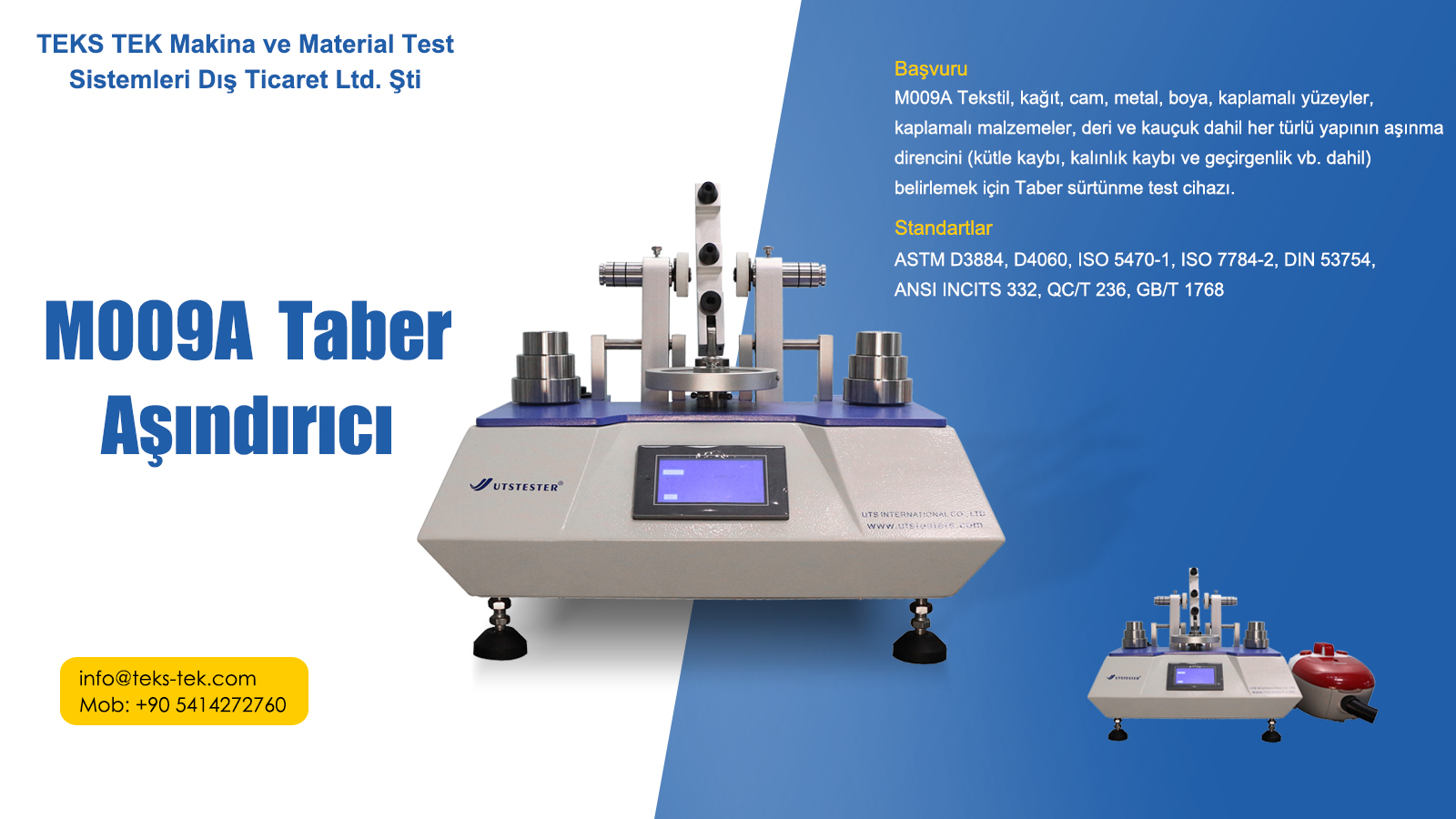
Application of Taber Abraser

Taber Abraser is an instrument widely used to test the wear resistance of material surfaces. It evaluates the durability of materials by simulating the friction and wear in actual use. Its main application areas include:

1. Paint and coating industry

Test purpose: evaluate the wear resistance of coatings such as paint, varnish, and electroplating.

Application scenarios: automotive coatings, furniture surface treatment, industrial anti-corrosion coatings, etc., to ensure that the product is not easy to wear or fall off during long-term use.

2. Plastic and rubber products

Test purpose: determine the scratch resistance and wear resistance of materials such as plastic films and rubber parts.

Application scenarios: packaging materials, tires, seals, etc., to optimize material formulations to increase service life.

3. Textiles and leather

Test purpose: Test the wear resistance of fabrics and leather, and simulate the friction loss in daily use.

Application scenarios: Clothing, footwear, furniture fabrics, etc., to ensure that the products are durable.

4. Paper and printing industry

Test purpose: Evaluate the wear resistance of printed materials (such as labels, wrapping paper) to prevent ink from falling off.

Application scenarios: Product packaging, book covers, etc., to ensure the long-lasting printing quality.

5. Electronic equipment

Test purpose: Test the scratch resistance of the surface of electronic components such as mobile phone screens and keyboards.

Application scenarios: Quality control of consumer electronic products and improve user experience.

6. Building materials and flooring materials

Test purpose: Evaluate the wear resistance of materials such as tiles, wood floors, carpets, etc.

Application scenarios: Material selection in the construction industry to ensure that the materials are suitable for use in high-traffic areas.

7. Automotive industry

Test purpose: Test the wear resistance of interior materials (such as dashboards and seat fabrics).

Application scenarios: Improve vehicle durability and aesthetics.

8. Research and development

Test purpose: Provide wear resistance data support for the research and development of new materials.

Application scenarios: Colleges and universities, laboratories and corporate R&D departments to optimize material performance.


Test Principle

The Taber friction tester rotates the specimen into contact with a friction wheel (such as a rubber wheel or a grinding wheel) and applies a specific load. After a certain number of frictions, the wear resistance is quantified by observing the degree of wear on the specimen surface (such as mass loss, gloss change, or scratch depth).


Advantages

Standardization: Complies with international standards such as ASTM D4060 and ISO 9352.

Repeatability: Provides consistent test conditions for easy comparison of results.

Versatility: Can be adapted to different friction wheels and loads to simulate a variety of wear scenarios.


Notes

(1) Choose the appropriate friction wheel and test parameters according to the material type.

(2) The instrument needs to be calibrated before testing to ensure data accuracy.

The application of Taber friction tester helps various industries to predict the wear resistance of materials in advance during product design and quality control, thereby reducing the failure rate in actual use and improving product reliability.

Email: hello@utstesters.com

Direct: + 86 152 6060 5085

Tel: +86-596-7686689

Web: www.utstesters.com

...

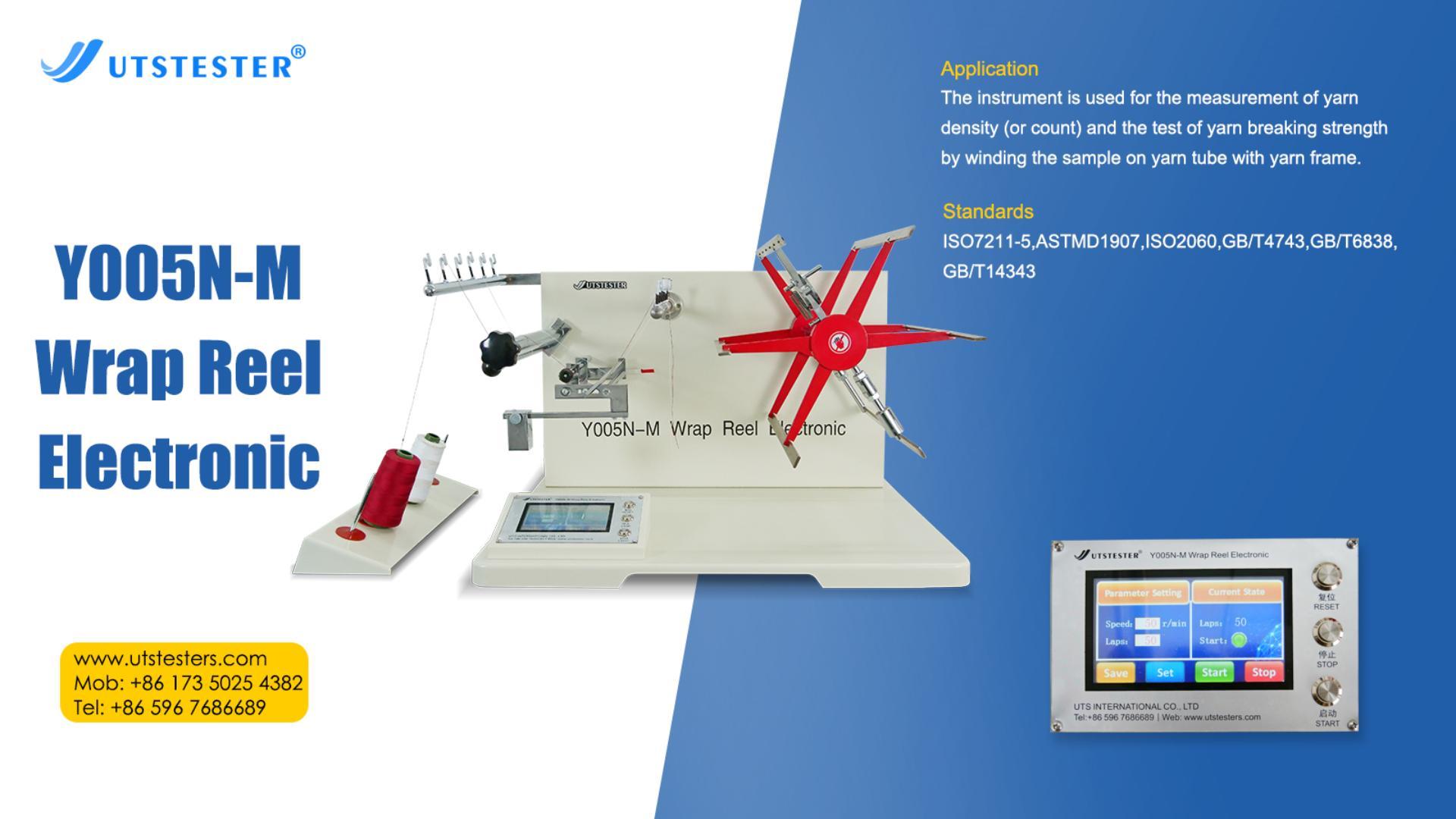
Guide to using the yarn length measuring instrument

The yarn length measuring instrument is a key device used in the textile industry to accurately measure the length of yarn. It is widely used in yarn production, quality inspection and research and development. The following is its standard operating procedures and precautions:


I. Preparation

1. Equipment inspection

(1) Confirm that the instrument is placed horizontally to avoid vibration or tilt affecting the accuracy.

(2) Check whether the yarn guide wheel, tension device, counter and other components are clean and free of wear.

(3) Calibrate the instrument (refer to the manufacturer's manual) to ensure that the measurement error is within the allowable range (usually ≤±0.5%).

2. Environmental requirements

Temperature: 20±2℃, humidity: 65±5% (avoid moisture absorption or drying of the yarn causing length changes).

3. Yarn sample

The sampling must comply with the standard (such as GB/T 4743), remove the surface hairiness or knots, and avoid affecting the tension.


II. Operation steps

1. Sample loading

(1) Fix the yarn tube on the unwinding frame, and lead the yarn through the yarn guide hook and tensioner in turn (set the tension according to the yarn type, such as 0.5±0.1cN/tex for cotton yarn).

(2) Make sure that the yarn is not entangled or twisted, and the end is fixed on the clamp of the winding arm.

2. Parameter setting

Preset length: Enter the target measurement length (such as 100 meters). Some instruments need to set the number of winding turns (circumference × number of turns = target length).

Speed adjustment: Select a low speed (such as 30m/min) to reduce tension fluctuations. High-count yarn or fragile yarn needs to be further reduced.

3. Start the measurement

(1) Press the start button, the instrument will automatically wind the yarn and count.

(2) Observe whether the yarn tension is stable. If the yarn breaks or slips, pause and adjust immediately.

4. Data recording

After reaching the set length, the instrument automatically stops and records the actual length on the display (such as 100.2 meters).

Repeat the measurement 3-5 times to get the average value to improve accuracy.

5. End the operation

Cut the yarn, remove the sample, and clean the residual fiber in the instrument.

III. Notes

1. Tension control

Too much tension will cause the yarn to stretch, and too little tension will cause the yarn to be loose. It needs to be adjusted according to the yarn material (such as chemical fiber/natural fiber).

2. Abnormal handling

(1) If the length deviation is greater than 1%, check the calibration of the tensioner or whether the yarn is slipping.

(2) Regularly verify the accuracy of the instrument with a standard yarn sample (e.g. calibrate after every 50 measurements).

3. Maintenance

Clean the yarn guide parts daily, lubricate the moving joints monthly, and have a comprehensive inspection by professionals every year.

IV. Application examples

Quality control: Measure the difference between the actual length of the yarn and the nominal length, and calculate the weight deviation per 100 meters.

Process adjustment: Evaluate the winding uniformity of the winder through multiple measurements.

Email: hello@utstesters.com

Direct: + 86 152 6060 5085

Tel: +86-596-7686689

Web: www.utstesters.com

...

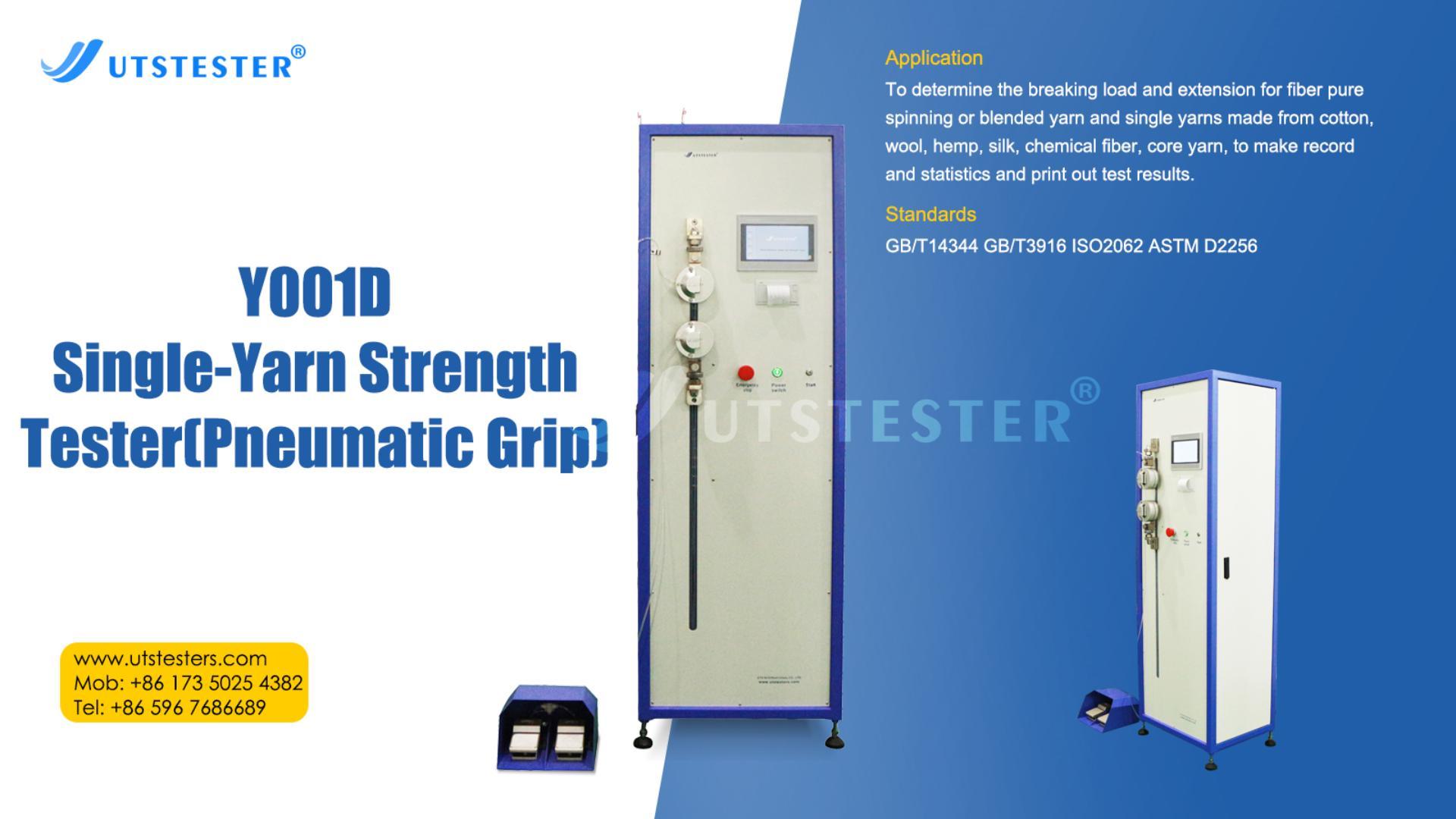
How to use the pneumatic yarn strength tester

The pneumatic yarn strength tester is mainly used to test the breaking strength and elongation of the yarn. The operation must be rigorous to ensure the accuracy of the data. The following are detailed instructions and precautions:


I. Operation steps

1. Preparation

Equipment inspection: Confirm that the air pressure source is stable (usually 0.4-0.6 MPa is required), there is no leakage in the air pipe connections, and the clamps are not worn.

Calibration: Use standard weights or calibrators to calibrate the force sensor and elongation device (recommended to be performed before starting the machine every day).

Yarn sampling: Cut a yarn sample of a specified length (usually 500mm) according to the standard (such as GB/T 3916) to avoid twisting or damage.

2. Clamping the sample

Clamp selection: Choose a flat clamp or a capstan clamp according to the thickness of the yarn to prevent slippage or clamping.

Clamping method:

(1) Place both ends of the yarn vertically into the upper and lower clamps to ensure that there is no slack or pre-tension.

(2) After clamping, check whether the yarn is centered to avoid deflection affecting the test results.

Pre-tension: The elastic yarn needs to be subjected to initial tension (such as 0.5cN/tex), which can be set with a tension clamp or software.

3. Parameter setting

Test mode: Select "constant speed stretching" (usually 100-500mm/min) or "constant elongation".

Test conditions: Set the gauge length (usually 250mm or 500mm), stretching speed, and number of tests (≥10 times, taking the average).

Air source adjustment: Adjust the air pressure to the required range of the equipment (such as 0.5MPa) through the pressure reducing valve.

4. Start the test

Click the "Start" button, and the device automatically stretches the yarn until it breaks.

Observe the yarn breaking process in real time. If there is slippage or abnormal fixture, pause and reload the sample immediately.

5. Data recording

The instrument automatically records the breaking strength (cN or N), breaking elongation (%), time-strength curve, etc.

Indicate the test conditions (temperature and humidity, stretching speed, etc.) when exporting data.

6. End cleaning

Turn off the air source and release the residual air pressure.

Clean the fixture to prevent fiber residue from affecting the next test.


II. Precautions

1. Safe operation

Do not touch moving parts during testing to prevent pinching.

The equipment will stop when there is a sudden gas failure and needs to be reset manually.

2. Data accuracy

Test the same sample at least 10 times and eliminate abnormal values (such as ±20% deviation from the mean).

Laboratory temperature and humidity must meet the standards (such as 20±2℃, 65±3%RH).

3. Maintenance points

Check the aging of the air pipe every week and lubricate the guide rail regularly.

The sensor should avoid overload shock and the calibration cycle should not exceed 3 months.

III. Common Problem Solving

Yarn slippage: Replace the anti-slip clamp or increase the clamping area.

Results fluctuate greatly: Check the yarn uniformity or clamp alignment.

The device does not respond: Confirm whether the air pressure meets the standard and restart the control system.

Through standardized operation and regular maintenance, the test results can be ensured to be reliable. The details of different models may vary slightly, it is recommended to refer to the specific equipment manual.


Email: hello@utstesters.com

Direct: + 86 152 6060 5085

Tel: +86-596-7686689

Web: www.utstesters.com


...

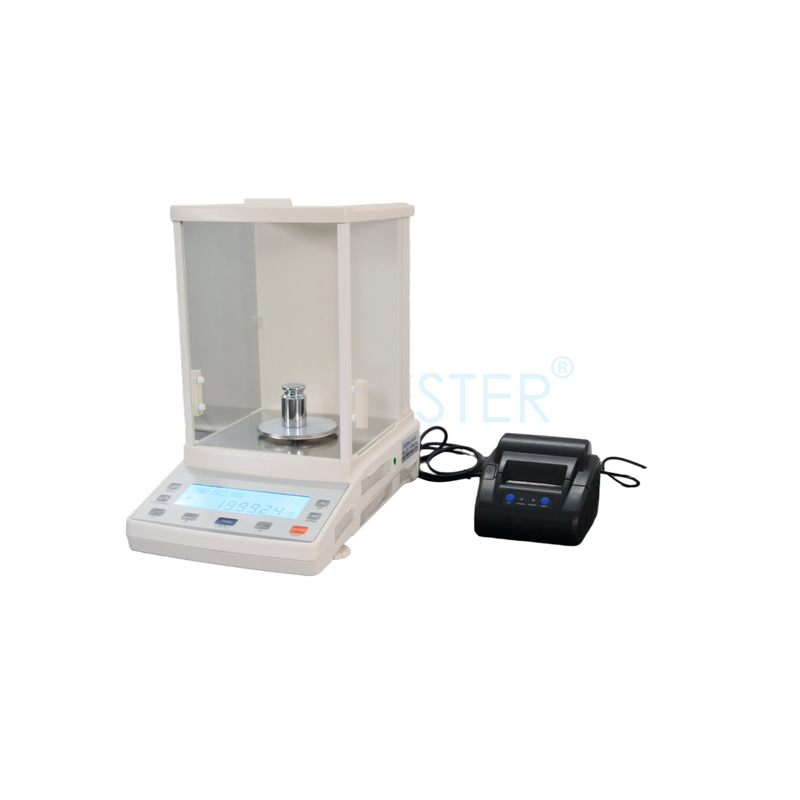
Purpose of Yarn Count Tester

Yarn count is an important indicator to measure the thickness of yarn, which directly affects the quality, performance and cost of textiles. Yarn count tester is a key testing equipment in the textile industry, mainly used to measure the linear density (count) of yarn to ensure the accuracy of quality control, product standardization and trade settlement in the production process.


I. Main Purpose of Yarn Count Tester

1. Accurate determination of yarn count

The core function of the yarn count tester is to determine the linear density of yarn, that is, the quality of yarn per unit length (such as Tex, Denier, Ne, Nm and other different units). Through accurate measurement, it can be judged whether the yarn meets the production requirements and avoid product quality problems caused by count deviation.

2. Textile production quality control

In the production links such as spinning, weaving, and knitting, the uniformity of yarn count directly affects the strength, feel, appearance, and dyeing effect of the fabric. The yarn count tester can detect the yarn quality in real time, help manufacturers adjust process parameters, and ensure product consistency.

3. Raw material acceptance and trade settlement

In the process of yarn procurement and sales, the count is an important basis for settlement. The yarn count tester can objectively evaluate whether the yarn provided by the supplier meets the contract requirements and avoid trade disputes caused by inconsistent counts.

4. Product development and optimization

When developing new products, textile companies need to test yarns of different counts to optimize fabric performance. Yarn count testers can provide accurate experimental data to help R&D personnel choose appropriate yarn specifications.

5. Laboratory testing and standard certification

Yarn count testers are widely used in textile testing institutions, laboratories and third-party certification agencies to implement international standards (such as ISO, ASTM, GB, etc.) to ensure that products meet industry specifications.


II. Application fields of yarn count tester

(1) Spinning mill: used for quality control in the yarn production process.

(2) Weaving mill: ensure that the yarn count meets the weaving requirements to avoid fabric defects.

(3) Printing and dyeing mill: yarn count affects dyeing uniformity, and the tester can help optimize the process.

(4) Quality inspection agency: used for compliance testing of yarn products.

(5) Trading company: provide objective count test data in yarn trading.


III.Summary

The yarn count tester is an indispensable testing tool in the textile industry. Its uses cover production control, quality inspection, trade settlement, product research and development, and other links. By accurately measuring the yarn count, enterprises can improve production efficiency, reduce costs, and ensure product quality, thereby enhancing market competitiveness.

As the textile industry develops towards intelligence and automation, high-precision yarn count testers will play a more important role in promoting industry standardization and high-quality development.


Email: hello@utstesters.com

Direct: + 86 152 6060 5085

Tel: +86-596-7686689

Web: www.utstesters.com


...

Alligator Shears Revolutionizing Scrap Metal Recycling

In the fast-paced world of scrap recycling, alligator shears have emerged as an indispensable tool for efficient metal processing. Named for their distinctive hinged jaw design that resembles an alligator's mouth, these powerful machines deliver exceptional cutting performance across a wide range of materials.  


Unmatched Cutting Power and Versatility  

Driven by advanced hydraulic systems, alligator shears generate immense force, allowing them to effortlessly slice through thick steel bars, metal pipes, automotive components, and other challenging scrap materials. Their primary function is to reduce large, unwieldy scrap pieces into smaller, uniform sections—a critical step in preparing metals for downstream processes such as shredding, melting, or compacting. By optimizing scrap size, these shears enhance handling efficiency, streamline transportation logistics, and maximize the overall productivity of recycling operations.  


Built for Durability and Performance  

Engineered for heavy-duty industrial use, alligator shears are renowned for their rugged construction and long-term reliability. Designed to endure the harsh conditions of scrap yards and recycling facilities, they deliver consistent performance even under continuous operation. Their straightforward yet robust design minimizes maintenance requirements, reducing downtime and ensuring uninterrupted workflow.  


A Sustainable Solution for Modern Recycling  

As the global demand for sustainable metal recycling grows, alligator shears play a pivotal role in improving material recovery rates and operational efficiency. By transforming bulky scrap into manageable pieces, they contribute to a more streamlined, cost-effective, and environmentally friendly recycling process.  


Whether processing demolition debris, manufacturing waste, or end-of-life vehicles, alligator shears remain a trusted solution for scrap recyclers worldwide—combining power, precision, and durability to meet the evolving needs of the industry.

...

Gantry shears Transforming the scrap metal recycling landscape

In the realm of metal recycling and processing, gantry shears stand as a remarkable innovation , revolutionizing the way we process scrap metal.


Gantry shears are heavy-duty hydraulic cutters designed for processing various metals. Their distinctive gantry-style construction provides exceptional stability and strength, enabling them to deliver tremendous cutting force. These robust machines can easily slice through thick metal plates, steel beams, and large scrap metal pieces with precision and efficiency.


One of the most significant advantages of gantry shears is their versatility. They can handle various metals like steel, aluminum, copper, and iron. Whether it's dismantling old cars, recycling construction waste, or processing industrial metal scrap, gantry shears prove to be up to the task.


Moreover, gantry shears are highly efficient and can finish the shearing process quickly, greatly boosting the productivity of metal recycling plants. Thanks to their precise cutting, they also reduce material waste, making recycling more cost - effective. This efficiency benefits recycling companies and has a positive environmental impact by promoting the reuse of valuable metal resources. 


In addition, the operation of gantry shear is relatively straightforward. With advanced hydraulic and control systems, operators can adjust the shear force, angle and speed according to different metal materials. Moreover, safety features are integrated into the design to ensure operator safety during high - pressure shearing. 


Gantry shears are crucial in scrap recycling. With powerful power, high precision and high automation, they can effectively improve efficiency. They're not just a machine but the key to unlocking metal recycling potential, turning waste into treasure and promoting a circular economy. 

...

Cast or forged wheels?

The primary differences between forged and cast wheels lie in the manufacturing processes, material characteristics, strength, weight, and cost. Here's a breakdown of the distinctions:


Forged Wheels:

1.Manufacturing Process:

Forging involves shaping metal using compressive force, typically through the use of dies and hammers.

The process aligns the grain structure of the metal, resulting in increased strength.

2.Material Characteristics:

Forged wheels are made from a solid piece of billet aluminum or other alloys.The alignment of the grain structure enhances the material's strength and reduces the likelihood of porosity.

3.Strength:

Forged wheels are generally stronger than cast wheels due to the grain structure alignment and absence of porosity. They are often used in high-performance and racing applications where strength is crucial.

4.Weight:

Forged wheels are typically lighter than cast wheels. The forging process allows for precise shaping and the removal of excess material, contributing to reduced weight. Again, it takes more metal for a cast wheel to meet the strength-to-weight ratio of a gorged wheel, so, spokes get thicker and heavier in cast wheel designs.

5.Cost:

Forged wheels are more expensive to manufacture, making them generally more expensive for consumers.


Cast Wheels:

1.Manufacturing Process:

Cast involves pouring molten metal into a mold and allowing it to solidify. Cast wheels are formed by filling molds with molten aluminum.

2.Material Characteristics:

Cast wheels are made from liquid metal that solidifies in the mold. The material may have slight variations in grain structure and may contain porosity.

3.Strength:

Cast wheels are generally not as strong as forged wheels due to the casting process, which may introduce porosity and other inconsistencies.

4.Weight:

Cast wheels can be heavier than forged wheels, as the casting process may not allow for as much precision in shaping and material removal.

5.Cost:

Cast wheels are more cost-effective to produce, making them a more affordable option for many consumers.


Conclusion:

Choosing between forged and cast wheels depends on factors such as budget, intended use, and preferences. For high-performance or racing applications where strength and weight are critical, and failure is not an option, forged wheels are the standard. Cast wheels, on the other hand, are more commonly used for everyday vehicles where actual performance is not a consideration.


...

Daily maintenance of wheels and what to pay attention to

1. Don't use detergent indiscriminately

Maintaining wheels is the same as maintaining a car. Many household detergents and dishwashers commonly used on the market are basically too strong for the surface of the wheel hub due to their alkaline or acidic nature, which will cause chemical reactions on the surface of the wheel hub and lose their luster. The relationship is beautiful. Be careful when using. You can choose a little neutral soapy water to rinse.

2. Do not wash the wheels when they are hot

When the hub temperature is high, it should be cleaned after cooling. Do not use cold water to cool down, this will damage the wheel hub, and even cause deformation of the brake disc, affecting the braking effect.

3. Clean the wheels clearly

Well-cleaned wheels should be cleaned with neutral soapy water and wiped with a soft cloth at the same time. After cleaning, the surface of the wheel hub should be coated with corrosion-resistant products to maintain the surface brightness. If the aluminum alloy wheel rim hub is glued with asphalt that is difficult to clean, if it has no effect, you can use a cleaner to remove it with a brush, but be careful to avoid using hard brushes, which can easily damage the surface of the wheel hub.


...