Tower Fan Vs Air Cooler – Which Is Ideal For Homes?
With the rising temperature in summer, it is now essential to use a cooling appliance at your home. An air conditioner works great but it is very expensive with high electricity consumption. For a limited budget, a pedestal fan, an air cooler, or a tower fan can be a suitable alternative.
However, depending on the application, cooling capacity and power consumption, the air cooler and tower fan are suitable for different purposes. After reading this article you will be able to distinguish the differences and compare tower fan vs air cooler to select the right one.
Before we proceed, we need to know the basics of the working of a tower fan and air cooler.
What Are Tower Fans?
Tower fans are known for their sleek and modern design coupled with powerful performance. Despite being powerful, the operation of tower fans is so efficient that they emit very minimal noise.
As the name suggests, these fans are tall, stylish, and produce a powerful airflow that spreads evenly in the room. Tower fans oscillate on a sturdy base and blow out air at a 90-degree angle, offering a wider coverage area.
However, no matter how ideal tower fans may sound, they have some significant disadvantages. Let’s discuss the advantages and drawbacks of tower fans in-depth.
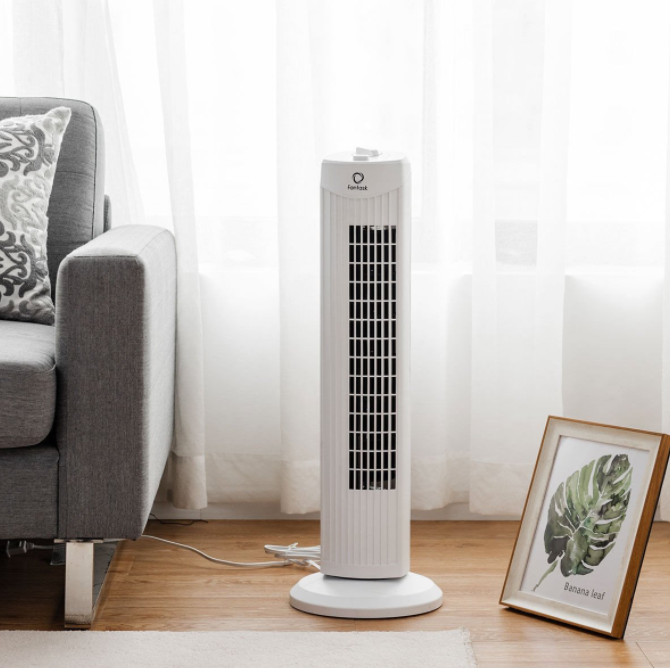
Tower Fan Uses
A tower fan has a typical shape similar to a tower. Basically, it has a structure of a cylindrical chamber. Inside the cylindrical tower, there is a motor is installed along with the impeller.
The impeller is meant to suck the air and push it. When you switch on the tower fan, the air is pulled inside the container from a small port. Then the air travels through the vertical tower and on the top it gets guided to the suitable direction inside the room.
You can control the flow and direction of air with the inbuilt controller of the tower. The
Advantages Of Tower Fans
1. SLEEK AND STYLISH DESIGN
2. MINIMAL SPACE REQUIREMENT
3. TOWER FANS RUN QUIETLY
4. BUILT-IN AIR PURIFICATION
Limitations Of Tower Fans
1. LIMITED COVERAGE AREA
2. FIXED AIRFLOW DIRECTION
What Are Air Coolers?
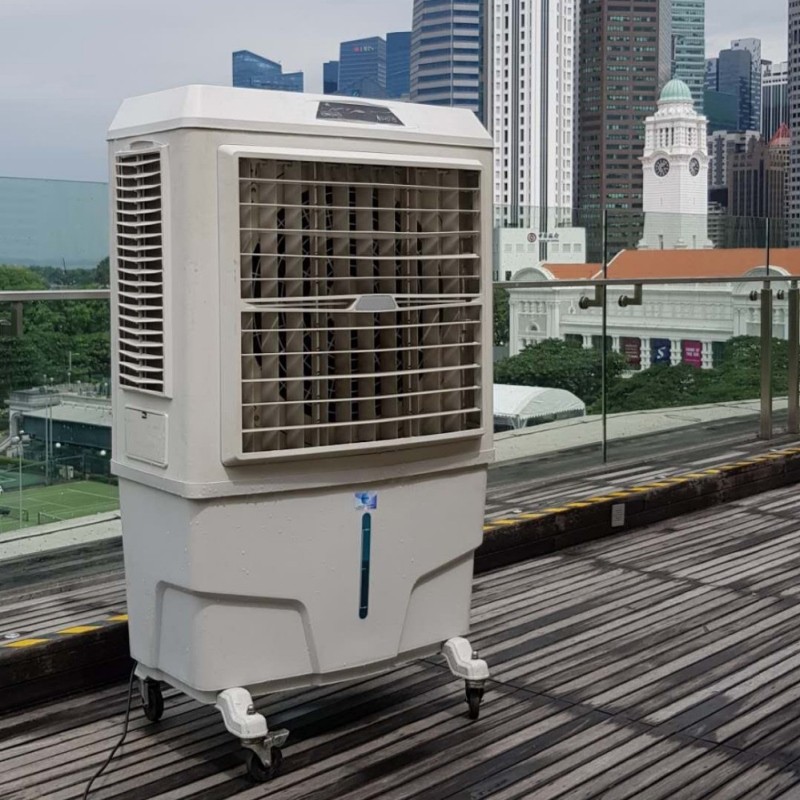
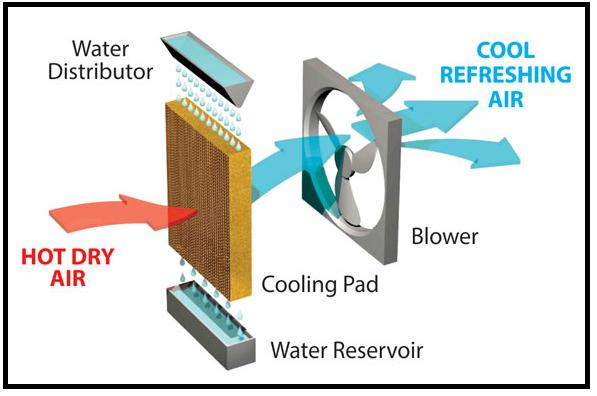
Air coolers utilize the principle of evaporative cooling and come in handy, especially on hot days where tower fans fail relentlessly. Air coolers produce a strong airflow like any other fan; it’s just that air coolers have a wet medium through which hot air passes.
This hot air evaporates the water present on the wet medium and generates a cooling effect. Air coolers are ideal for the summer seasons. However, no machine comes without any drawbacks; it’s the same with air coolers.

Air Cooler Uses
Air coolers are great alternatives to air conditioners on a tight budget. Though it does not offer high cooling efficiency like a 1.5 to split AC, it works well. The wet-type air coolers are more effective than dry coolers.
The best air coolers work on the principle of evaporation. To use it properly, at first, you need to fill the storage chamber with water. When the switch is turned on, the blower pushes the outside air over the stored water.
Over time, the air loses latent heat to the water and the water starts to evaporate. During this process, the air cools down in the room.
However, wet air coolers do not work well where humidity is very high. With high moisture content in the air, the water does not evaporate easily. In that case, you need to go to an Air Conditioner.
Advantages Of Air Coolers
1. STRAIGHTFORWARD DESIGN
2. AN ECO-FRIENDLY APPROACH TOWARDS COOLING
3. AIR COOLERS ARE COST-EFFECTIVE
Limitations Of Air Coolers
1. REQUIRES PROPER VENTILATION
2. EVAPORATIVE AIR COOLERS DO NOT WORK IN HUMID AREAS
Tower Fan Vs Air Cooler Comparison
Point of Difference | Tower Fan | Air Cooler |
Size, Weight & Space Requirement | This is an area where tower fans crush the competition. They’re so sleek that these modern fans fit anywhere in the room, taking minimal space. In addition, they don’t weigh much and are easier to move from one place to another. | Although technology is changing the definition of an air cooler, most air coolers are still bulky, heavy, and take up a lot of space. |
Working Method | A tower fan simply pushes and recirculates the air around it in a specific direction, creating a solid airflow. | Air coolers work by evaporative cooling of water. When you put a suitable quantity of water and turn it on, the cooler will evaporate the water with the help of an inbuilt blower and cool down the room. |
Air Circulation | The 90-degree airflow of tower fans covers the entire area. However, tower fans are only effective in small rooms or if you sit very close to them. | Air circulation was never the primary goal of air coolers, although they’re not bad at it.Unlike tower fans, air coolers are harder to move around and only produce unidirectional airflow. However, air coolers cool the entire area, which compensates for this limitation. |
Cooling Capacity | Tower fans do not generate any kind of additional cooling in the area. | Unlike tower fans, air coolers rely on evaporative cooling to produce a cooling effect in the room. However, air coolers do not work in areas with poor ventilation. |
Noise & Vibration | Tower fans do a remarkable job in muffling the mechanical sounds and vibrations that the motor and blades collectively produce. However, they produce some noise, but it’s so low that you may not even notice it. | Unlike tower fans, air coolers follow a pretty straightforward design which doesn’t allow them to muffle the noise and vibrations. Some air coolers generate levels of noise that go beyond acceptable limits for some users. |
Water Usage | Tower fans do not need water to work. | Depending upon the ambient temperature, an average air cooler requires at least 80-100 litres of water per day to generate the desired cooling effect. |
Ease of Use | Unlike air coolers, tower fans do not require a single drop of water to function ideally; just turn them on, and you’re good to go. So, using tower fans is a piece of cake. | Air coolers fall short to tower fans when it comes to ease of use. You need to fill the air cooler with water before using it; tower fans demand no such thing. |
Cleaning & Maintenance | A tower fan can collect dust inside the unit’s housing which needs to be cleaned. However, cleaning these fans isn’t as easy as it’s with air coolers. Also, tower fans,although not very frequently, demand proper maintenance to function ideally.Moreover,the maintenance costs are also higher in the case of tower fans. | The medium that cools the air and the water tank of an air cooler needs frequent cleaning.However, the cleaning is fundamental and can quickly be done at home without any expert supervision. Also, like tower fans, air coolers demand maintenance, but the costs are comparably meagre. |
Health Benefits | Some tower fans come with an air purification system that filters all the dust particles and germs from breathable air. The system uses ionization that has many other health benefits. | Air coolers do not have a dedicated air purification system, just a wet medium that filters dust and other small particles in the air. Air coolers do provide some health benefits but not as much as tower fans. |
Power Consumption | By utilizing advanced technology and energy-efficient mechanical components, tower fans’power consumption is very low compared to air coolers. Also, tower fans don’t have multiple power-hungry components, unlike air coolers. | The power consumption of air coolers is pretty high as compared to tower fans. That’s primarily because of the involvement of an extra water pump without which an air cooler is no less than a bulky tower fan. The motor that rotates the blade is also relatively powerful and thus consumes more power. |
Best Use | Tower fans are best suited for cluttered spaces such as offices, kitchens, etc. However, you can’t use tower fans to replace air coolers, especially in the summer season. | Air coolers are the most suitable for places with low humidity. With high water evaporation,they work close to an air conditioner in such areas. |
Tower Fan Or Air Cooler- Which Is Better And Why?
Which Appliance Has A Less Space Requirement?
The size, weight, and space requirement of an appliance especially concern users having limited space in their home. Both tower fans and air coolers come in various size options, although, in general, tower fans are way more efficient for space savings. Tower fans also weigh much less than air coolers, thanks to fewer components.
On the other hand, air coolers are bulky and heavier than tower fans, especially when you fill these with water. And unlike tower fans, it’s tough to move air coolers between places.
Winner: Tower Fan
Tower Fan Vs Air Cooler : Working Method
The working of an air cooler is entirely based on the law of evaporative cooling. It uses a wet medium through which air passes and causes evaporation which finally generates cooling. The air cooler has a water pump to keep the medium wet constantly.
A tower fan also utilizes the principle of evaporative cooling, but it only has to rely on the sweat secreted by the human body. Tower fans produce a powerful airflow that interacts with the human skin and increases the evaporation rate on the skin, thereby producing a cooling effect.
However, tower fans become helpless in scorching and humid climates, and you should always prefer using an air cooler in such cases.
Which One Circulates Air Better?
Air circulation of an appliance determines the capability of an appliance to provide a powerful airflow that uniformly covers the entire space. In that case, tower fans produce a 90-degree powerful airflow ideal for small rooms but not for bigger ones.
On the other hand, an air cooler focuses more on generating the cooling effect in the room. So, an air cooler with swing function also have the air circulation to cover the whole area, the cooling it produces is fair compensation for that.
Winner: Air Cooler
Tower Fan Or Air Cooler- Which One Has Higher Cooling Capacity?
Cooling capacity is the ability of an appliance to generate a cooling effect throughout the room. Tower fans generate no additional cooling whatsoever. They just push the nearby air using the blades and create a powerful airflow. So, tower fans don’t do much when it comes to cooling the space.
However, that’s precisely where air coolers take the lead; they have a water pump and a wet medium through which hot air passes and turns into cool air due to evaporation. Air coolers work like a charm in spaces with proper ventilation.
Winner: Air Cooler
Air Cooler Vs Tower Fan : Noise And Vibration
Tower fans are known for their silent and vibration-free operation. These fans generate noise, but most of that noise gets muffled, thanks to the advanced design of tower fans that lets them achieve a noiseless operation.
On the other hand, air coolers are very noisy as compared to tower fans. However, manufacturers are implementing various techniques to minimize the noise emitted by air coolers.
Winner: Air Cooler
Water Requirement Of Air Coolers
As the name suggests, water usage is the amount of water the appliance consumes in a given amount of time. Tower fans solely rely on the motor and the attached blades to produce a focused airflow; it doesn’t demand water or any other refrigerant for its operation. So, the water usage of tower coolers is practically zero.
However, air coolers require a lot of water to generate the desired cooling effect. The water usage of air coolers can vary from 60-100 litres per night.
Which Appliance Is Easier To Use?
Ease of use can be referred to as the convenience of using the appliance. In that case, air coolers don’t come even close to the comfort of using a tower fan. You need to push the button, and the tower fan will take care of the rest.
On the other hand, you need to fill the air cooler with water before using it. You should also make sure the air cooler is in the correct position to ensure better air circulation.
Winner: Tower Fan
Tower Fan Vs Air Cooler : Health Benefits
The health benefits of an appliance determine the positive effects that your body will experience upon using an appliance. In that case, both tower fans and air coolers come with an air purification system to help users with lung diseases.
Winner: Tower Fan/Air Cooler
Cleaning And Maintenance Requirements
To ensure a longer lifespan of your appliance, it must demand less maintenance and cleaning. However, tower fans require a lot of frequent cleaning and expensive maintenance. Air coolers also demand regular cleaning, but it’s straightforward. Also, the parts of an air cooler are readily available and cheaply priced, reducing the maintenance costs.
Winner: Tower Fan
Tower Fan Vs Air Cooler: Power Consumption
You may refer to the power consumption of an appliance as its wattage. The lower the wattage, the higher the efficiency of an appliance. In that case, a tower fan is an ideal choice for you. Air coolers involve a powerful motor and a water pump that increases their wattage, making them less power-efficient than tower fans.
Winner: Tower Fan
Best Use Of Tower Fan & Air Cooler
This defines the usability of an appliance, the areas where it can provide you with the best results, and the areas where it’ll fail relentlessly. In that case, tower fans are ideal for you if you have limited space in your room and don’t want to add extra clutter to your space. Tower fans have possibly the best space-saving design to fulfil this requirement. However, these fans don’t do much in bigger rooms or areas with a hot ambient temperature. Such cases require you to switch to air coolers. These machines are ideal for use in hot weather, thanks to the reliable cooling they can provide.
FAQ About Tower Fan Vs Air Cooler
Which is better tower fan or cooler?
An air cooler involves higher maintenance with more consumption of electricity. You may also notice some noise from an air cooler. If you live in an area with high humidity, the air cooler does not work well. In that case, a tower fan or air conditioner is suitable. A tower fan can be used for general purposes.
What is the difference between an air cooler and a tower fan?
An air cooler works on the principle of evaporation. The air loses the latent heat to the cooling water. It triggers the evaporation of water chilling the room air. Whereas, a tower fan does not cool down the air. Instead, it circulates the air inside the room.
As you can see from the above comparison of tower fan vs air cooler, the tower fans do not cool the air. Instead, it circulated the air in the room. Whereas, air coolers circulate and cool down the air through evaporation.
Tower fans are an advanced version of a stand fans. Air coolers can be a good alternative to air conditioners if you live in a dry place with low humidity
...