current location : home

The Compelling Advantages of Metal Baling Machines

In the demanding world of scrap metal recycling and industrial operations, efficiency, safety, and cost control are paramount. Metal baling machines emerge as indispensable tools, transforming loose, cumbersome scrap into dense, manageable packages. Their advantages significantly enhance operational workflows and profitability:


1.  Massive Volume Reduction & Space Savings: This is the most immediate and impactful benefit. Baling machines exert immense hydraulic pressure (often hundreds or thousands of tons) to crush and compress bulky scrap metal – think shredded cars, sheet metal offcuts, wire, cans, or turnings – into compact, rectangular bales. This drastically reduces the volume, sometimes by ratios of 10:1 or more. The result is vastly reduced storage footprint requirements, freeing up valuable factory or yard space for other activities and minimizing the sprawling, hazardous piles of loose scrap.


2.  Optimized Transportation & Logistics: Dense, uniform bales are exponentially easier and more cost-effective to handle, stack, and transport compared to loose scrap. They maximize payload capacity on trucks, railcars, and shipping containers, significantly reducing the number of trips required. This translates directly into substantial savings on freight costs, fuel consumption, and associated emissions. Bales are also stable and secure during transit, minimizing spillage and safety hazards.


3.  Enhanced Material Handling Efficiency: Bales are designed for mechanized handling. Forklifts and cranes can effortlessly move, stack, and load these uniform blocks. This eliminates the labor-intensive, slow, and often dangerous process of manually moving or shoveling loose, sharp, and heavy scrap metal. Loading and unloading times at processing facilities or mills are dramatically reduced, streamlining the entire supply chain.


4.  Improved Workplace Safety: Loose scrap metal presents significant hazards: sharp edges, protruding wires, instability causing collapses, and heavy lifting injuries. Baling mitigates these risks. The compact bales have fewer exposed sharp points, are stable when stacked, and can be handled mechanically, keeping workers at a safer distance from the material itself. This creates a significantly safer working environment.


5.  Increased Material Value & Marketability: Mills and foundries prefer dense, consistent bales. They are easier to feed into furnaces, melt more efficiently due to reduced surface oxidation, and often yield higher purity melt results. This consistency and ease of processing make baled scrap a more desirable commodity, potentially commanding better prices in the market compared to loose, mixed, or contaminated loads.


6.  Reduced Labor Costs: Automating the compaction process significantly reduces the manual labor required for gathering, moving, and loading scrap. While the machine requires operation, it replaces numerous laborers engaged in physically demanding and hazardous tasks, leading to long-term labor cost savings.


7.  Environmental & Site Benefits: By minimizing loose scrap piles, baling reduces the risk of environmental contamination from rust, fluids (trapped within appliances/vehicles), or wind-blown debris. It also presents a much tidier, more organized, and professional appearance for any scrap yard or industrial site.


In essence, metal baling machines are not just compactors; they are strategic assets that drive efficiency, safety, and profitability throughout the scrap metal lifecycle. By transforming chaotic waste into a valuable, dense commodity, they deliver tangible benefits in space utilization, transportation economics, labor costs, safety standards, and ultimately, the bottom line. For any operation handling significant volumes of scrap metal, a baler is an investment that pays for itself many times over.

...

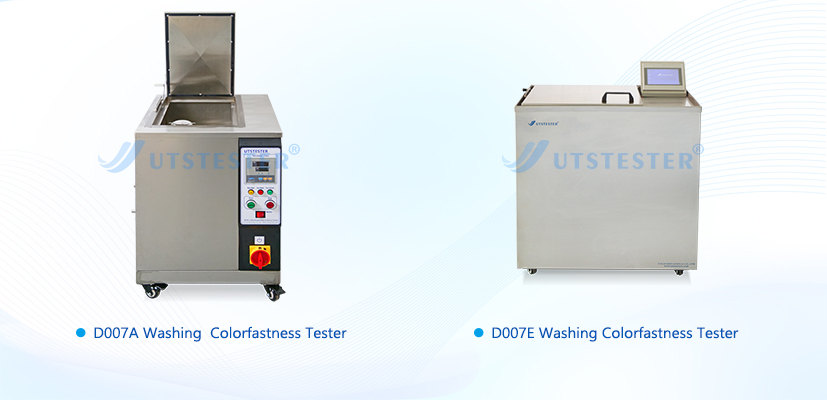
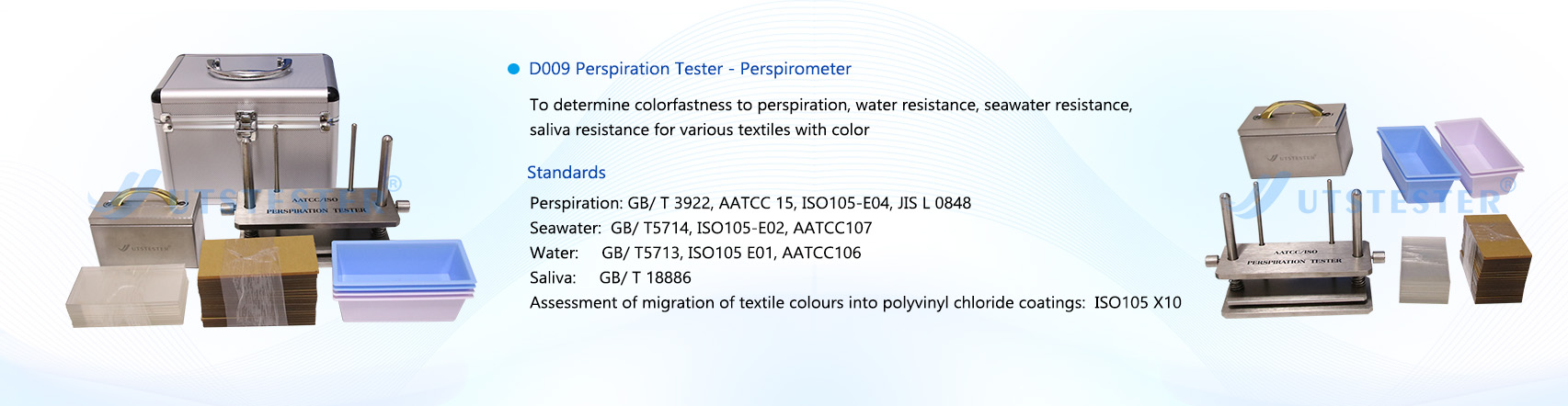
Textile dyeing fastness testing methods and their importance

1. Basic Concepts of Color Fastness in Textiles


Color fastness, in simple terms, refers to the ability of textiles to maintain their color stability during use. It encompasses multiple aspects, including resistance to washing, friction, light, sweat, sweat stains, and sunlight exposure. Different color fastness indicators represent how textiles perform under various environmental conditions. For example, washing fastness refers to the degree of color change after repeated washing of garments; while lightfastness reflects the degree of color fading under sunlight.

The quality of colorfastness directly impacts the product's lifespan and aesthetic quality. If colorfastness is insufficient, issues such as color bleeding, discoloration, or fading may arise, which not only affect appearance but may also lead to customer dissatisfaction or returns. Conducting scientific and standardized colorfastness testing has become a standard practice within the industry.


2. The Process and Standards for Color Fastness Testing


Color fastness testing typically follows national or industry-established standards to ensure the scientific rigor and comparability of the testing process. The general process consists of four main steps: sample preparation, setting test conditions, actual testing, and evaluation of results.


(1) Sample Preparation: Representative samples are selected from a batch to ensure that test results reflect overall product quality. Samples should be cut and marked according to specifications to avoid contamination or damage.

(2) Test Condition Setup: Appropriate standards and methods are selected based on the test requirements. For example, water resistance testing may follow the washing procedures specified in national standards, while lightfastness testing uses specific light sources and exposure times.

(3) Actual Testing: Conduct tests on samples in a strictly controlled laboratory environment following standard procedures. For example, simulate real-life conditions such as washing, friction, and exposure to sunlight, and observe changes in sample color.

(4) Result Evaluation: Use professional color difference meters or visual comparison for assessment. Colorfastness grades are assigned according to standard classifications, where “Grade 1” indicates excellent colorfastness and “Grade 5” indicates poor colorfastness.


3. The Importance of Color Fastness Testing for Textiles


(1) Textiles with poor color fastness often experience dye shedding, and some low-quality dyes may enter the human body through skin contact or the respiratory tract, causing allergies, inflammation, or even long-term health risks. Testing can indirectly screen out products where dyes are firmly bonded to fibers, reducing the risk of harmful substance release.

(2) Colorfastness testing can precisely identify issues in production, such as improper dye selection during dyeing or incorrect fixation process parameters (e.g., poor temperature or pH control). Companies can adjust their processes based on test results to improve product stability and reduce batch defect rates.

(3) Outdoor clothing requires lightfastness, medical textiles require disinfectant resistance, and sportswear requires sweat-light composite colorfastness. These specialized testing requirements drive companies to develop targeted dyeing technologies, thereby enhancing product value and market competitiveness.

Textile colorfastness testing not only ensures basic quality and safety but also promotes industry upgrading and trade facilitation. Its importance spans the entire lifecycle of a product, from production to consumption, making it a crucial pillar for the high-quality development of the textile industry.

Email: hello@utstesters.com

Direct: + 86 152 6060 5085

Tel: +86-596-7686689

Web: www.utstesters.com

...
What Can a Universal Strength Tester Measure and Why Is It Essential for Lab Use?

Do you know what a tensile testing machine is? Let's uncover its mysteries together.


1. What is a tensile testing machine?

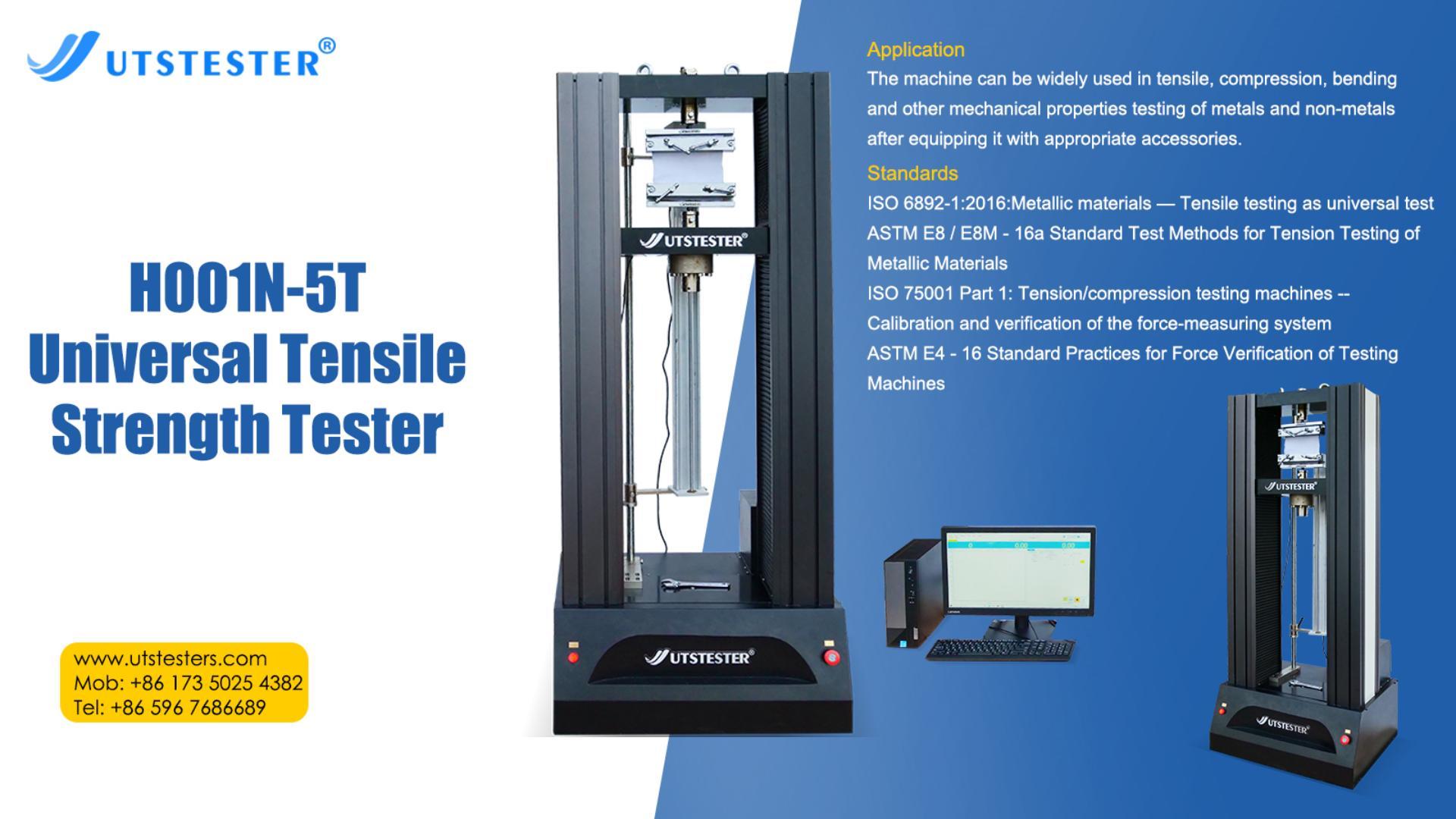
A tensile testing machine, also known as a universal testing machine, is like a doctor that gives materials a comprehensive “checkup.” It is mainly used to measure the mechanical properties of various materials, such as plastics, metals, rubber, and textiles. By applying forces such as tensile, compressive, bending, shear, peel, and tear forces to these materials, it can precisely measure important performance indicators such as strength, toughness, and elastic modulus.


In terms of working principle, a tensile testing machine primarily relies on Hooke’s Law and strain measurement principles. Hooke’s Law states that within the elastic range, the force applied to a material is directly proportional to the deformation it undergoes. The strain measurement principle involves calculating the material's various mechanical properties by measuring the minute deformation of the material under force. When a material sample is secured to the tensile testing machine and the force is gradually increased, the sensors on the machine precisely record the force applied to the material and the resulting deformation, thereby determining the material's performance parameters.

A tensile testing machine primarily consists of several key components. First is the drive system, which transmits the motor's power to the loading system. The loading system is responsible for applying force to the material and can precisely control the magnitude and direction of the force applied to the material according to different test requirements. The measurement system uses various sensors, such as force sensors and displacement sensors, to monitor the force applied to the material and the resulting deformation in real time. The control system can precisely control the entire testing process according to pre-set programs, ensuring the accuracy and reliability of the test results.


2I. Classification of Tensile Testing Machines

There are numerous types of tensile testing machines, which can be classified according to different standards.

Based on the level of automation, we can classify them into pointer-type tensile testing machines, digital display tensile testing machines, and computer system tensile testing machines.

Based on the type of control system, they can be categorized into variable frequency system tensile testing machines, servo system tensile testing machines, and other drive type tensile testing machines.

Based on industry and functional characteristics, they can be categorized into metal tensile testing machines, rubber tensile testing machines, plastic tensile testing machines, textile tensile testing machines, paper tensile testing machines, and leather tensile testing machines, among others.

Additionally, they can be categorized based on test materials, temperature, application, and degree of automation. For example, based on test materials, they can be divided into tensile testing machines with metal material fixtures and non-metal material fixtures; based on test temperature, they can be divided into tensile testing machines with room temperature, high-temperature, low-temperature, and high-low temperature fixtures; based on application, they can be divided into tensile fixtures, compression fixtures, bending fixtures, and other application-specific tensile testing machines; based on automation level, they can be divided into manual, pneumatic, electric, and hydraulic fixture tensile testing machines.


3. Application Areas of Tensile Testing Machines

Tensile testing machines have widespread applications across various fields.

In the industrial sector, industries such as manufacturing, metallurgy, petroleum, chemicals, and construction materials all rely on tensile testing machines.

For example, in mechanical manufacturing, tensile testing machines can be used to test the strength and toughness of various mechanical components, ensuring product quality and reliability. In the manufacturing industry, textile factories use tensile testing machines to test the elongation rate of fabrics, ensuring that finished garments do not deform easily when worn.

In the metallurgy industry, tensile testing machines can be used to test the performance of metallic materials such as steel, providing a basis for improving metallurgical processes.

In the petroleum and chemical industries, tensile testing machines can be used to test the material properties of various pipelines, containers, and other equipment, ensuring safe operation under harsh working conditions.

In the construction materials industry, tensile testing machines can be used to test the performance of construction materials such as cement, bricks, and steel, ensuring the quality of construction projects.

In the field of scientific research, tensile testing machines are indispensable tools. Researchers can use tensile testing machines to conduct performance tests and studies on various new materials, contributing to the development of materials science.

Tensile Strength Tester

Email: hello@utstesters.com

Direct: + 86 152 6060 5085

Tel: +86-596-7686689

Web: www.utstesters.com

...
Comprehensive Guide to CNC Press Brake From Principles to Usage Steps

In the sheet metal processing industry, the "CNC Press Brake (Computer Numerical Control Press Brake)" is becoming a core device for companies to improve production line efficiency and product precision. This article will provide a comprehensive introduction to the workings and practical applications of CNC press brake from four aspects: principle, structure, advantages, and usage steps.


1. What is a CNC Press Brake?

A CNC press brake is a device that precisely bends sheet metal by controlling the movement of the slide and backgauge. It uses a CNC system to control the movement of each axis, combined with hydraulic drive, die pressure, and angle detection, to achieve precise, stable, and efficient sheet metal bending.

Depending on the drive method, common types include:


✅ Electro-hydraulic synchronous bending machine (servo-hydraulic control, mainstream configuration)


DE68T electro-hydraulic CNC bending machine


✅ Torsional axis synchronous bending machine (simple structure, suitable for general needs)


Copper plate pure electric press brake


✅ Pure Electric servo bending machine (high-end energy-saving model, suitable for small precision workpieces)


torsion shaft bending machines


2. The main components of CNC bending machine

Module Name

Function Description

CNC System

Controls slide travel, backgauge position, angle compensation, and program calls.

Upper and lower molds

Key tools for forming bend angles and shapes.

Slider device

Drives the upper die up and down, applying pressure to form the shape.

Hydraulic System

Provides pressure to control the synchronized and stable operation of the slides.

Backgauge

Positions sheet length and controls bend dimensions.

Compensation System

Automatically adjusts for angular errors caused by machine tool deformation (e.g., mechanical/hydraulic compensation).

Safety protection devices

such as light curtains, emergency stop buttons, and access control interlocks, enhance operational safety.


3. The main advantages of CNC bending machines

1. High Precision and Excellent Repeatability

The CNC system achieves positioning accuracy of ±0.01mm, ensuring high bending angle consistency.


2.Fast mold changeover and simple operation

Using program calls and graphical guidance, mold and process switching can be completed in minutes, making it suitable for high-variety orders.


3.Adaptable to Flexible Manufacturing

Supports complex bending paths and multi-stage bending programs, making it suitable for customized, low-volume, and high-volume production.


4.Ample room for intelligent upgrades

Automated loading and unloading, robotic collaboration, and angle detection systems can be expanded to enable automated production line deployment.


4. Correct use steps of CNC bending machine

1. Power-On Inspection:

Check the hydraulic oil level;

Confirm that the power supply, voltage, and air pressure are safe;

Check that the mold is securely installed and that the safety devices are intact.


2. Programming:

Enter the bending angle, length, sequence, and backgauge position;

Import machining drawings via the graphical interface or USB;

Set compensation parameters and limit switches.


3. Plate Positioning and Operation:

Place the plate on the workbench, close to the back gauge.

A foot pedal controls the movement of the slide to perform the bending.

The system automatically controls the angle and stroke to avoid over- or under-pressure.


4. After bending is completed:

Check the workpiece dimensions and angles;

Turn off the power and clean the equipment;

Keep daily maintenance records.


5. Applicable industries and typical applications

CNC bending machines are widely used in:


Sheet metal fabrication: Chassis, cabinets, brackets

Automotive parts: Body frames, support beams

Home appliance manufacturing: Refrigerator doors, air conditioner casings

Power distribution industry: Control cabinets, switch cabinet door panels

Stainless steel products industry: Cabinets, stair railings, door and window components


6. Summary

With the continuous advancement of industrial automation and intelligent manufacturing, CNC press brakes are gradually replacing traditional manual bending and becoming the "intelligent backbone" of sheet metal production lines. For companies considering equipment upgrades or improving processing precision, choosing a CNC press brake with stable performance, high intelligence, and easy operation is undoubtedly a key step in achieving both efficiency and quality improvements.


If you have further questions about equipment selection, operator training, or export configuration, please feel free to contact the ZYCO technical team. We will provide you with professional and efficient one-stop solutions.

...

How to Choose the Right Ventilation & Cooling Equipment for High-Temperature Regions

Introduction

In scorching climates where temperatures routinely exceed 40°C (104°F), effective cooling isn't just about comfort—it's about safety and productivity. This guide breaks down how to select industrial-grade cooling solutions that combat extreme heat efficiently.


The High-Temperature Challenge: Key Considerations

1. Climate Profile

    • Dry Heat (e.g., deserts): Prioritize evaporative cooling (works best<60% humidity)

    • Humid Heat (e.g., tropics): Opt for HVLS fans + ventilation systems

    • Intense Solar Radiation:  Roof-mounted units with UV-resistant housings

    2. Space Requirements


    Space Type
    Cooling Approach
    Warehouses (>500m²)Industrial evaporative coolers (20K+ CMH)
    WorkshopsPortable coolers + directional airflow
    Outdoor AreasMist fans + shaded cooling zones

    3. Heat Sources

      • Machinery-heavy sites: Add 20% extra cooling capacity

      • High-occupancy areas: Prioritize air exchange rates (≥40 changes/hour)


      Sizing Your System: A Data-Driven Approach

      (Based on Siboly's Model Selection Guide)

      Step 1: Calculate Air Changes Needed

      Air Changes/Hour (N) = Total Airflow (CMH) ÷ Room Volume (m³)

      Reference Chart:


      Environment
      Air Changes/Hour
      General Space25-30x
      Crowded Areas30-40x
      Machinery/Heat-Intensive40-60x


      Step 2: Determine Total Airflow

      Total Airflow (CMH) = Room Length × Width × Height × N

      Example:20m × 30m × 10m workshop needing 40 changes/hour

      = 6,000m³ × 40 = 240,000 CMH

      Step 3: Select Equipment

      • 240,000 CMH requirement = 12 × Siboly 20,000 CMH roof-mounted coolers

      • Add HVLS fans for 5-8°C perceived temperature reduction


      Equipment Recommendations for Extreme Heat

      1. Evaporative Coolers

      • Best for: Dry regions (≤50% humidity)

      • Top Picks:

        • Roof-Mount Units (1.5KW-3KW) for large spaces

        • Portable 20K+ CMH models with 100L+ tanks

      • Key Features:

        • Corrosion-resistant pads (5090 cellulose)

        • Auto-refill systems for 24/7 operation

    1. Hybrid Solutions (Humid Climates)

      • HVLS Fans (7.3m diameter) + exhaust systems

      • Desiccant dehumidifiers + spot-cooling units

    2. Critical Add-Ons

      • HEPA/Dust Filters (for sandy/dusty areas)

      • Solar-powered options (reduce grid dependency)

      • Remote monitoring (track humidity/temp via app)


      Cost-Saving Strategies

      • Energy EfficiencyEvaporative coolers use 90% less power than AC

      • Zoned Cooling: Target only occupied areas

      • Preventive Maintenance:  Clean pads monthly → 30% efficiency boost

      Real-World Case: Saudi auto plant reduced cooling costs by 62% using roof-mounted evaporative systems + HVLS fans.


      Common Mistakes to Avoid

      1. Under sizing equipment for heat-intensive processes

      2. Neglecting humidity control in tropical zones

      3. Using residential-grade units in industrial settings


      Call to Action

      "Struggling with extreme heat? Our engineers will design a custom cooling solution—request a free site assessment today!"

      +86-0591-23533555 |  siboly@siboly.com

      ...

      Master SD Series Engineering the Future of Circulation Efficiency

      In a world increasingly focused on energy savings, system intelligence, and carbon reduction, pump technology must evolve accordingly. At Shinhoo, innovation is our foundation—and Master SD Series stands as our latest advancement in circulation systems.

      Designed for high-efficiency, low-noise, and digitally controlled performance, Master SD represents a leap forward in how we approach HVAC, heat pumps, and solar applications.Built on decades of R&D and engineering experience, Master SD Series combines advanced motor efficiency, intelligent control, and structural durability, making it one of the most comprehensive solutions for residential and light commercial circulation applications.


      Redefining Circulation with Technology-Driven Efficiency

      At the heart of Master SD lies a neodymium magnet rotor, enabling up to 30% greater motor efficiency than traditional asynchronous models. Complementing this hardware is Shinhoo’s self-developed digital PCB control platform, capable of real-time response and system-level optimization, delivering up to 45% improvement in operational performance.

      To further optimize energy use, the pump’s hydraulic system is engineered with CAE (Computer-Aided Engineering) simulation, achieving a remarkable 64% gain in fluid efficiency while minimizing noise and turbulence.


      Smart Control. Silent Operation. Stronger System Integration.

      Master SD is equipped with 12 built-in control modes, including auto-adaptive operation, PWM, constant pressure, and proportional flow modes—allowing it to seamlessly integrate with various heating, cooling, solar, and heat pump configurations.

      With a noise level as low as 42 dB(A) and real-time display of power and flow, the unit delivers performance that is both intelligent and silent — ideal for today’s smart and space-conscious homes.


      Built for Extreme Environments

      Recognizing the diverse climates and challenging installations faced by modern systems, Master SD features:

      Anti-condensation structure and thermal insulation plate to prevent internal moisture buildup

      Non-corrosive polymer hydraulic components, validated by 2,000-hour salt spray and 5,000 test cycles

      Protection ratings up to IPX5, making it suitable for rooftops, coastal regions, and high-humidity installations


      Proven Reliability, Internationally Validated

      Every pump undergoes over three months reliability testing protocol, consisting of 35 critical evaluations in CNAS-certified laboratories and in partnership with TÜV standards.

      These tests include thermal cycling, durability under load, electrical safety, vibration resistance, and environmental stress testing—ensuring 100% quality assurance prior to market release.

      With its compact design, ultra-low power consumption (as low as 5W), and high adaptability, Master SD is the ideal pump for new builds, retrofits, and sustainable construction projects worldwide.


      ...

      Swimming Pool Pump Smart, Efficient & Durable Filtration

      A crystal-clear pool starts with a high-performance circulation system. Shinhoo Swimming Pool Pump with Frequency Converter redefines reliability and efficiency, combining cutting-edge technology with rugged engineering to deliver unmatched performance in any environment.


       Why Choose a Digital Pool Pump?  

      As a variable speed pool pump, Shinhoo’s digitally controlled motor adjusts flow rates intelligently, optimizing energy use without compromising filtration. Unlike single-speed pumps, it reduces power consumption by up to 30%, making it a truly energy-efficient pool pump that cuts operational costs while maintaining pristine water quality.  


       Built for Extreme Conditions  

      Fortress-Grade Protection (IP55) – Resists salt spray, heavy rain, and UV damage, ensuring longevity even in coastal or rooftop installations.  

      Non-Corrosive Polymer Flow Path – Passes 2,000h salt spray and 5,000 chemical cycle tests, eliminating rust risks for safer water.  

      10,000-Hour Mechanical Seal – Silicon carbide sealing ensures leak-free durability, 5x more wear-resistant than standard seals.  

       Engineered for Convenience  

      3L High-Capacity Filter – Captures debris down to 75μm, reducing cleaning frequency by 50%.  

      2.5m Self-Priming & Quick-Install Design – Adapts to underground or rooftop pools with minimal setup effort.  


       The Future of Pool Maintenance  

      Shinhoo’s digital pool pump integrates smart speed adjustments, corrosion-proof materials, and effortless maintenance—delivering decade-long reliability with 30% lower energy costs.  

      Upgrade to precision. Experience the Shinhoo difference.  


      ...

      6 signs that it's time to replace your press brake

      In sheet metal manufacturing, bending machines are a very critical link. However, many factories still have old bending machines that have been used for more than ten years. They seem to be "usable", but they have already become the "invisible killer" of production line efficiency, quality consistency and even customer satisfaction.

      The following are 6 clear signals summarized from an engineering perspective, which show that your bending machine has dragged down your production capacity, profits, and even order opportunities —— it is time to consider upgrading and replacing the machine.


      1. Bending accuracy is difficult to guarantee and rework is frequent


      Common manifestations:

      For the same batch of products, the angle deviation is ±2~3°, and the end "corner drop" is serious;

      Workers repeatedly adjust the angle, resulting in high test piece costs and low yield rates;

      The cumulative dimensional error after multiple bending steps is large, which affects assembly or welding.

      The reason behind:

      The structure of the old torsion shaft bending machine is worn and deformed;

      The synchronization error is uncontrollable and there is a lack of closed-loop feedback from the grating scale;

      Lack of real-time compensation mechanism.

      Impact: Unstable precision → Customer returns → High quality control pressure → Lost orders

      Recommendation: Upgrade to an electro-hydraulic servo bending machine (dual Y-axis independent control + closed-loop compensation), which can achieve angle control within ±0.5° and ±0.2mm repeatability.


      2. Changing molds and adjusting machines is troublesome, changing orders is slow, and workers are annoyed


      Common manifestations:

      Changing the mold/plate thickness/angle all depends on manual adjustment, which takes 5 to 10 minutes of trial and error;

      The CNC system cannot automatically adjust the gap, pressing, angle compensation, etc.;

      Changing one process slows down the entire production line.

      The reason behind:

      Older press brakes lack automatic gap/angle/compensation systems;

      The CNC system is too old (such as E21/E200) and only supports basic control;

      There is no mold identification system and no prompts when changing molds.

      Impact: Slow order change → High reliance on manual labor → Overall efficiency declines → Unsuitable for multi-batch flexible orders

      Recommendation: Choose a new CNC bending machine with automatic die change (ATC), die recognition, and automatic loading of process programs (such as DA66T, ESA S660 system).


      3. Hydraulic system frequently has problems, and maintenance becomes the norm


      Common manifestations:

      Oil cylinder leaks, seal fails, and system temperature rises;

      The solenoid valve sometimes works and sometimes doesn't, and the action is "stuck" or "empty";

      Hydraulic oil needs to be changed twice a year, and maintenance costs are rising year by year.

      The reason behind:

      The hydraulic system is aging, and the internal seals and valve groups are worn;

      Low control accuracy, large movement impact, and increased wear;

      The cooling system fails or the oil pump efficiency decreases.

      Impact: Frequent downtime → High maintenance costs → Delayed delivery → Poor after-sales reputation

      Recommendation: Upgrade to an electro-hydraulic servo system, using a proportional servo pump + intelligent temperature control + low-noise oil pump to extend system life, reduce energy consumption and maintenance pressure.


      4. High energy consumption, high noise, poor operating environment


      Common manifestations:

      The main motor is running continuously, and is "wasting energy" even if it is not bending;

      Noise is greater than 85 decibels and vibration is strong, affecting the health of operators;

      The oil temperature rises quickly and overheating alarms frequently sound in summer.

      The reason behind:

      The traditional hydraulic bending machine is a quantitative pump + continuous pressure supply system;

      There is no energy-saving mechanism and the motor runs at full speed throughout the entire process;

      The old machine lacks energy-saving/quiet design.

      Impact: Increased electricity costs → employee turnover → Failure to pass ISO environmental certification

      Recommendation: Use an electro-hydraulic servo system + a low-noise hydraulic station to save 30-60% energy and significantly improve the workshop environment.


      5. The equipment cannot be connected to the automation system and cannot keep up with the trend of intelligent manufacturing


      Common manifestations:

      Cannot connect to robotic arms/automatic stacking equipment;

      The CNC system cannot communicate with the MES/ERP system;

      Unable to collect data, track quality, or upload and download programs.

      The reason behind:

      The CNC system is closed or outdated and has no communication interface;

      The control architecture does not support linkage with external devices;

      No industrial bus or network connection capability.

      Impact: Factory automation deployment is hindered → Falling behind peers → Wasted upgrade investment

      Recommendation: Choose an open CNC system that supports OPC, Modbus, and Ethernet communications (such as Delem, ESA, Cybelec, etc.) to achieve intelligent factory connection.


      6. Customer requirements have changed, and the old equipment is no longer able to meet the needs


      Common manifestations:

      New customer specified "stainless steel within ±1° error", which could not be achieved;

      Overseas customers have stricter acceptance procedures, requiring video simulation and angle testing;

      The customer needed to quickly deliver multiple model orders, and the old machine was difficult to handle.

      The reason behind:

      The market demands upgrades, but the equipment is not updated synchronously;

      Unable to quickly respond to small-batch, high-variety orders;

      Lack of digital management and control makes it impossible to meet customer quality tracking requirements.

      Impact: Loss of old customers → Loss of large orders → Forced profit reduction → Loss of competitiveness

      Suggestion: timely replacement of bending machines to keep up with the market rhythm will not only improve quality, but also enhance brand image and bargaining power.


      Summary: Replacing bending machine ≠ spending money, it is "stop loss", not "whether it can be used", but "whether it can still help you make money"


      When many companies are hesitating about whether to replace equipment, they often only look at whether the bending machine can still be used, but ignore a core fact: the real money spent is not on buying a new machine, but on rework, errors, delays, and customer loss caused by the "old machine".

      If you find that the problems mentioned above are common in your factory, you may consider replacing it with a stable and intelligent bending machine provided by ZYCO to get your production line running again!


      press brake machine china


      ...

      Why do customers now prefer Electro-Hydraulic Press Brake?

      In the past, many customers considered price first when purchasing a press brake, but now, more and more users are turning their attention to Electro-Hydraulic press brake.

      Whether the customers are from the Middle East, Europe, Southeast Asia or South America, we have found one thing in common: they are more willing to pay for high performance, low energy consumption and intelligence.

      So, "Why do customers now prefer Electro-Hydraulic Press Brake?" The answer is actually very simple —— it solves problems that traditional equipment cannot solve.


      ✅ Reason 1: Higher bending accuracy and more stable quality


      The electro-hydraulic bending machine adopts left and right independent cylinder control (Y1/Y2), and performs closed-loop synchronous control through a servo proportional valve. Compared with traditional torsion shaft bending machines, it has obvious advantages:


      automated sheet metal bending


      · The system monitors the cylinder position in real time through the grating ruler and automatically corrects the deviation every second;

      · The bending angle error can be controlled within ±0.5°;

      · The angles at both ends of the long workpiece are consistent, and there is no need for repeated debugging;

      · The automatic compensation system can make intelligent corrections based on the plate thickness and material.

      Result: Improved pass rate, reduced rework rate, and higher customer satisfaction.


      ✅ Reason 2: Energy saving and noise reduction, low operating cost


      The electro-hydraulic bending machine is equipped with a servo pump control system, which runs the hydraulic system only when performing bending actions, greatly reducing energy consumption:

      · Energy saving is 30%~60% compared with traditional hydraulics;

      · Noise is as low as 70 decibels, making the workshop quieter;

      · The oil temperature is constant, the oil ages slowly, and the hydraulic system has a longer life.

      Result: The electricity bill + oil replacement cost saved in one year is enough to buy a set of molds.


      ✅ Reason 3: Supporting automation upgrades, saving manpower and increasing efficiency


      The electro-hydraulic system has a stable structure and high control accuracy, making it naturally suitable for access to automation systems, such as:

      · Robotic Hand loading and unloading;

      · Automatic mold change (ATC);

      · MES system data linkage;

      · Laser angle measurement system.

      Result: Fewer workers, higher efficiency, and 24-hour production line is possible.


      ✅ Reason 4: Simple operation and low training cost


      The matching CNC systems (such as DELEM DA53T, DA66T, EASYCAT ET18, ESA S660W, etc.) all support:


      hydraulic sheet metal brake


      · Multi-language operation interface (English, Spanish, French, etc.);

      · Graphical programming, even beginners can quickly get started;

      · Bending simulation function allows early detection of collisions and angle deviations.

      Result: Customers no longer have to rely on "experienced workers", and newcomers can easily get started.


      Summary


      In 2025, ZYCO electro-hydraulic bending machine is not only an equipment choice, but also the "standard configuration" for global sheet metal processing companies to move towards high quality, high efficiency and intelligent manufacturing.

      If you are an importer, distributor or end customer, and are looking for a bending solution with high precision, low energy consumption, easy maintenance and strong automation support, the electro-hydraulic bending machine will be your best choice.

      ...

      Can the Evaporative Air Cooler be used on rainy days?

      When turning on the air cooler and cooling function on rainy days, certain 

      situations may occur:

      Principle.jpg

      1. Water leakage at the air outlet may occur. While rain water normally cannot enter the air cooler, 

      strong wind and rain outdoors may allow rainwater to enter and cause leakage.


      2. If the indoor air is humid and the temperature reaches the dew point temperature, there may be 

      condensation on the swing blade of the air outlet, resulting in dripping.


      3. When it is raining outside, the water vapor in the air is close to saturation. Therefore, when the air cooler 

      turns on its refrigeration function, the water above the wet curtain may not be evaporated by the incoming air, leading to a decrease in cooling effect on rainy days.

      ...