Deploying hardware in outdoor environments presents a massive engineering challenge: corrosion. When fabricated metal parts are constantly exposed to driving rain, coastal salt spray, and extreme humidity, oxidation is inevitable if the material is not properly protected. For Original Equipment Manufacturers (OEMs), a rusted chassis in the field doesn't just look unprofessional—it leads to structural failures, voided warranties, and catastrophic damage to the sensitive electronics housed inside.
Preventing rust requires a multi-layered defense strategy. It begins at the CAD design phase, relies heavily on correct raw material selection, and culminates in advanced surface treatment technologies. If you are outsourcing production for high-value outdoor infrastructure, understanding these anti-corrosion methodologies is critical. Here is an authoritative guide on how to engineer and manufacture sheet metal components that can survive decades in the harshest environments.
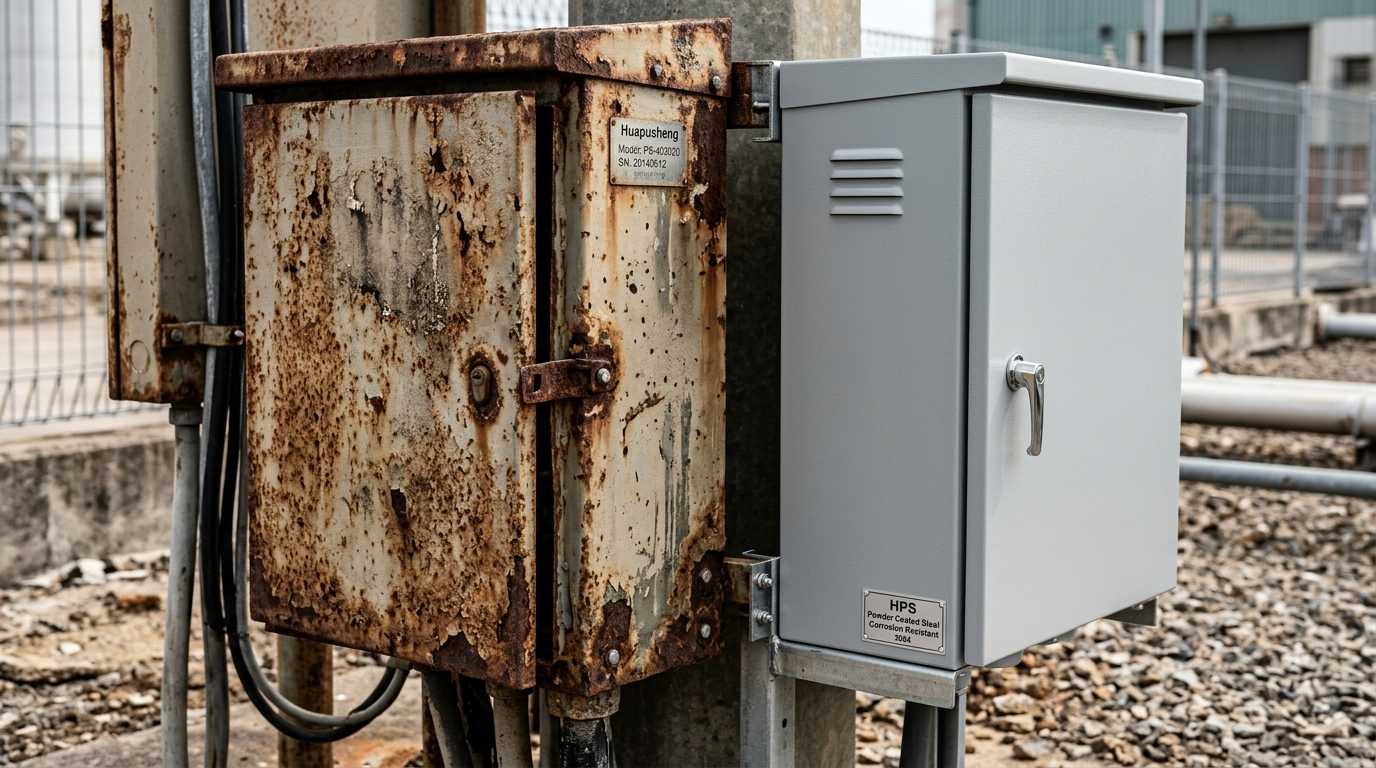
Selecting the Right Corrosion-Resistant Base Material
The most effective way to prevent rust is to start with a metal that naturally resists it. While standard cold-rolled carbon steel (SPCC) is cost-effective, it will begin oxidizing within hours of exposure to moisture. For outdoor applications, engineers must upgrade the base material.
Galvanized Steel (SECC/SGCC): This is the most common choice for outdoor commercial equipment. The carbon steel is coated with a microscopic layer of zinc, which acts as a "sacrificial anode." Even if the topcoat of paint is scratched, the zinc will oxidize before the underlying steel does, effectively halting the spread of rust. This material is widely used to manufacture large-scale Galvanized Steel Power Cabinets.
Stainless Steel (304 and 316): For marine environments, wastewater treatment plants, or highly corrosive industrial zones, stainless steel is mandatory. The chromium content in the alloy forms a passive, self-healing oxide layer. While 304 stainless steel is excellent for general outdoor use, 316 stainless steel contains molybdenum, which specifically prevents pitting corrosion caused by coastal salt spray.
The Power of Electrophoretic Deposition (E-Coating)
If you must use standard carbon steel, or if you want to add an indestructible primer layer to galvanized steel, E-coating is the ultimate industrial solution. Unlike traditional liquid spraying, E-coating is an immersion process that utilizes electrical currents to deposit paint onto a metal part.
Because the metal part is submerged in an electrically charged liquid bath, the coating reaches into every single crevice, blind hole, and folded hem that a standard spray gun could never reach. This ensures 100% coverage. In the automotive and telecommunications sectors, specifying industrial surface treatment services like an E-coat primer combined with a top layer of powder coating is the gold standard for achieving a 1,000-hour salt spray test rating.
Advanced Powder Coating for UV and Weather Resistance
Powder coating is far superior to standard wet paint for outdoor sheet metal parts. The dry powder is electrostatically applied to the grounded metal part and then baked in a curing oven at high temperatures (typically around 200°C). This process causes the powder to melt and cross-link into a solid, highly durable polymer shell.
However, not all powder coats are created equal. For indoor parts, epoxy powders are common. But for Weatherproof Metal Housings, OEMs must specify polyester or polyurethane powder coatings. Epoxy breaks down and "chalks" under ultraviolet (UV) sunlight, whereas outdoor-grade polyester powders maintain their color, gloss, and structural integrity even after years of direct sun exposure.
Eliminating the "Edge Effect" Before Coating
One of the most frequent reasons outdoor metal parts fail prematurely is due to a phenomenon known as the "edge effect." When metal is cut by a laser or a punch press, it leaves a microscopic sharp 90-degree edge. During the powder coating process, the surface tension of the melting polymer causes the paint to pull away from these sharp edges, leaving the corners with a dangerously thin layer of protection.
To combat this, elite manufacturers utilize automated edge-rounding machines before applying any chemical treatments. By mechanically sweeping abrasive brushes over the cut parts, the sharp corners are converted into smooth radii (R-angles). This guarantees that the powder coating adheres uniformly across the entire component, completely sealing off potential rust points on complex Industrial Control Panels.
Partner with an Expert in Outdoor Metal Fabrication
Preventing rust is not a matter of luck; it is a calculated science that combines material engineering with flawless factory execution. When building outdoor telecom enclosures or infrastructure hardware, ensuring your manufacturer understands these critical surface treatments is the key to protecting your brand's reputation.
At Huapusheng, we operate complete in-house pre-treatment and advanced powder coating lines. We strictly control the entire process—from laser cutting and automated edge rounding to the final high-temperature cure—guaranteeing that your products will easily pass rigorous 500-hour and 1000-hour salt spray tests. Consult with our fabrication experts today to determine the most cost-effective anti-corrosion strategy for your next project.
Frequently Asked Questions
What is a Salt Spray Test (ASTM B117)?
The salt spray test is an accelerated corrosion testing method used to evaluate the protective properties of a coating. The sheet metal part is placed in a sealed chamber and subjected to a continuous dense fog of 5% sodium chloride solution. Passing a 500-hour or 1,000-hour test is the standard benchmark for outdoor durability.
Can aluminum sheet metal rust?
Aluminum does not contain iron, so it cannot "rust" (form red iron oxide). However, raw aluminum can still corrode or oxidize, forming a white, powdery layer on its surface. To prevent this, outdoor aluminum parts are typically protected through anodizing, chromate conversion coating, or polyester powder coating.
Why should I choose E-coating over standard primer?
Standard spray primers rely on line-of-sight application, which often misses the tight inside corners of a bent sheet metal part. E-coating uses an electrical charge in a liquid bath, forcing the anti-corrosion primer to bond uniformly across 100% of the part's surface area, making it vastly superior for complex geometries.