The most important factor in choosing a hospital backup generator is simple: critical life-safety systems must stay energized without interruption. Every other decision—sizing, code compliance, fuel storage, cost—flows from that single principle. Lose power to an operating room or an ICU ventilator, and the consequences are immediate.
Diesel generators remain the standard for hospital emergency power. They start fast, carry heavy loads, and hold up under sustained demand. This diesel generator selection guide walks you through the decision path step by step. You will learn how to assess loads, meet code requirements, specify equipment, evaluate site fit, budget for lifecycle costs, and commit to testing and maintenance.
Key Takeaways
-
List all hospital circuits that need power during an outage. Sort them into life-safety, critical, and equipment loads.
-
Follow NFPA 110, NFPA 99, and local codes from the start. Keep detailed records to prove compliance.
-
Choose a generator with the right power rating and fuel storage. Match the automatic transfer switch to your load.
-
Budget for the full lifecycle: purchase, installation, fuel, maintenance, and eventual replacement.
-
Test your generator regularly with load bank testing. Schedule preventive maintenance and check fuel quality.
Assess Hospital Power Loads
Load Analysis and Critical Circuits
Start your load assessment with a room-by-room walkthrough. List every circuit the hospital needs during an outage, then sort each one into the three branches defined by NFPA 99: life-safety, critical, and equipment. Life-safety loads include egress lighting, fire alarms, and smoke control systems. Critical loads cover operating rooms, ICUs, ventilators, blood banks, and medication refrigeration. Equipment loads include imaging suites, lab analyzers, and HVAC for patient areas.
Your inventory should record the running watts, starting surge, and power factor for each load. Motor-driven equipment draws a much higher current at startup than at steady state, so note which circuits carry large motors. Add the totals branch by branch rather than as one lump sum. This breakdown shows you exactly which circuits must stay energized and which the generator can shed under extreme demand.
Redundancy and Future Capacity
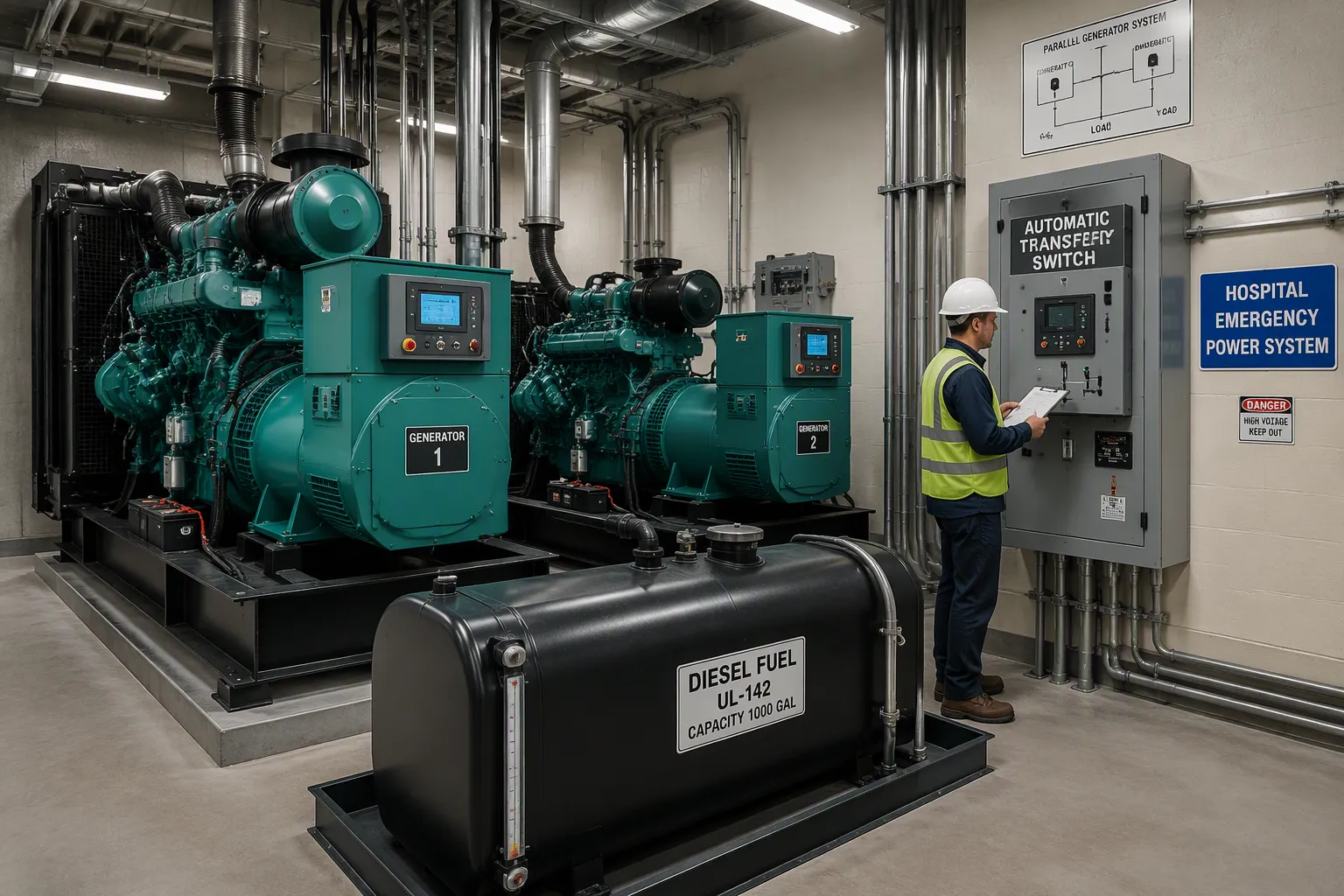
A single generator is a single point of failure. Redundancy options let you protect critical circuits even when one unit goes down. An N+1 configuration adds one spare generator beyond the number needed to carry the load. Paralleling ties two or more units together so they share demand and one can drop offline without an outage.
Plan spare capacity at the same time. Hospitals rarely shrink, and new imaging equipment or expanded wards add load quickly. Size the generator and its fuel system with headroom for realistic growth. Document your assumptions now, because a clear load study makes later expansion far easier to justify and budget.
Meet Code Compliance
NFPA 110 and Joint Commission
Code compliance is not paperwork you handle after the purchase. It shapes the generator you buy, the room you build, and the tests you run for the life of the unit. Treat the standards as design inputs from day one.
NFPA 110 sets the performance requirements for emergency and standby power systems. It defines the system classes and levels that determine how fast your generator must accept load and how long it must carry it. It also governs installation details, including the day tank, remote annunciation, and battery systems. NFPA 99 works alongside it and defines which hospital loads belong on emergency power in the first place. Read the two together, because one sets the load categories and the other sets the equipment that serves them.
The Joint Commission adds an operational layer. Surveyors expect documented maintenance, recorded testing, and evidence that your emergency power supply system performs as designed. Keep a log that ties each test result back to the NFPA 110 requirement it satisfies. A generator that runs perfectly but lacks records will still draw a finding.
Compliance is proven by documentation, not by intention. Build the record-keeping habit before the first survey, not after it.
Local Codes and Inspections
Local authorities having jurisdiction, or AHJs, hold the final say on your installation. Their requirements can exceed the national standards, and they vary widely by city and state. Contact the AHJ early in the design phase. Ask about fuel storage permits, setback distances, exhaust stack height, and sound limits before you finalize the generator location.
Expect several inspection gates along the way. Electrical inspections cover the automatic transfer switch, grounding, and conductor sizing under NFPA 70, the National Electrical Code. Building and fire inspections cover the generator room, fuel piping, and fire separation. Some jurisdictions also require a witnessed load test before they will sign off.
Plan the inspection sequence into your construction schedule. A missed gate can delay occupancy even when the equipment itself is ready. Assemble the submittal package in advance: equipment cut sheets, the load study, the transfer switch ratings, and the fuel system drawings. A complete package shortens review time and reduces the chance of a re-inspection. Confirm every local amendment in writing, and keep that correspondence with your project file.
Generator Specifications: A Diesel Generator Selection Guide
Power Rating, Fuel Storage, and Transfer Switches
Power rating comes first. A standby rating describes a generator that runs only during outages and carries variable loads. A prime rating describes a unit built for continuous duty at a steady load. Hospitals almost always specify standby units, because the generator waits for an outage and then carries the emergency branches. Choose the rating that matches the duty cycle, and confirm the rating basis with the manufacturer. A unit sold at standby power cannot carry that load around the clock.
Fuel storage sizing follows the NFPA 110 class you selected. The class sets how long the system must run without refueling. Size the main tank and any day tank to cover that duration at your calculated load, then add margin for testing and for refueling delays. Confirm the tank location, containment, and piping with your AHJ before you order equipment.
The automatic transfer switch, or ATS, moves the load from utility power to generator power and back. Specify the ATS for the full load current, the correct number of poles, and a transfer sequence that matches your branch priorities. A well-matched ATS starts the generator, confirms stable voltage, and transfers without disturbing sensitive equipment.
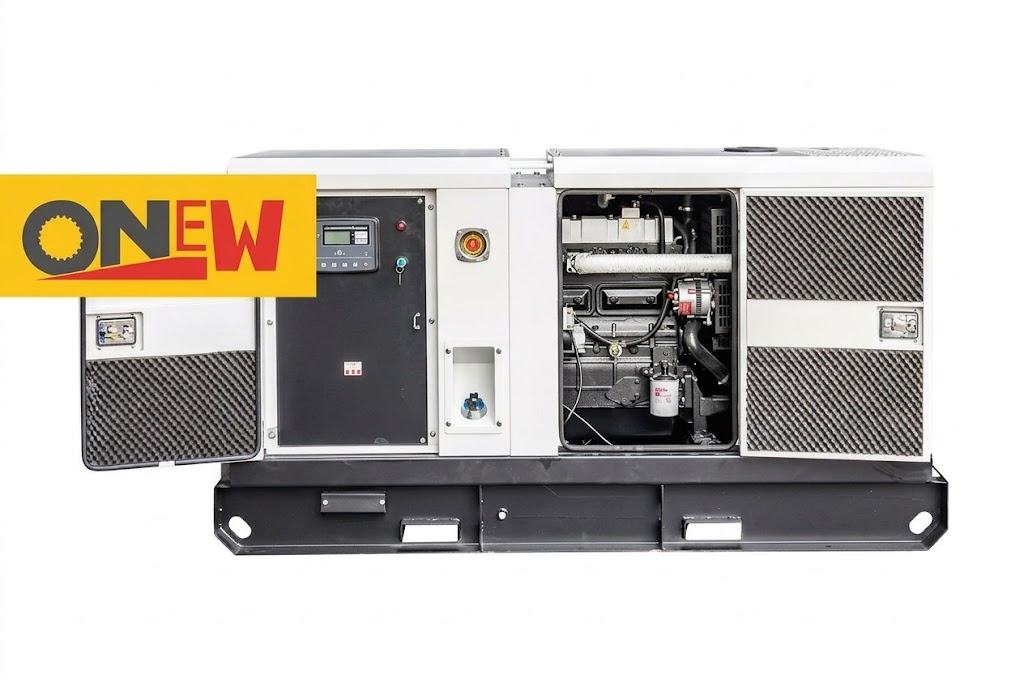
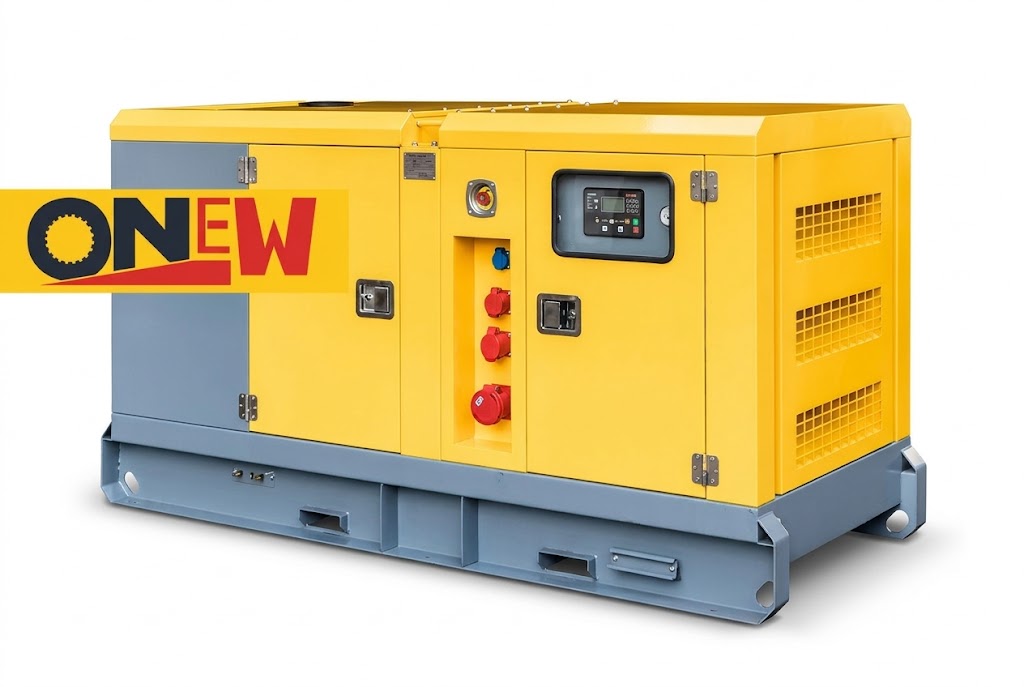
Modern diesel generators give you broad choices. Onew Power models, for example, offer 50Hz and 60Hz options across a wide kVA and kW range, with engine platforms from MTU, Baudouin, and Ricardo. These units include noise reduction, emissions control, and smart monitoring. Treat these as illustrative options and match the platform to your load study. A high-capacity unit such as the Cummins 128kW 160kVA Stamford Generator shows the class of equipment suited to hospital backup duty.
Paralleling for Reliability
Paralleling connects two or more generators to a common bus so they share the load. The approach pays off in three ways. First, you gain redundancy: one unit can drop offline for service while the others carry critical circuits. Second, you can match capacity to demand by running only the units you need. Third, you can add capacity later without replacing the whole plant.
Paralleling demands more engineering than a single unit. The controls must synchronize voltage, frequency, and phase before closing a breaker. Load sharing must stay balanced across running units. Protective relaying must isolate a faulted unit without collapsing the bus. Specify these functions as a package, and require factory testing of the paralleling controls before shipment.
Use this diesel generator selection guide to compare proposals on rating basis, fuel duration, ATS matching, and paralleling controls. Those four items separate a compliant specification from a hopeful one.
Evaluate Application Fit
Standby Versus Prime Power
Match the generator's duty rating to how your hospital will actually run it. A standby unit waits for utility failure and then carries the emergency branches for the duration of the outage. That profile fits most hospitals, where the generator spends long stretches idle and then works hard during a storm or grid event. A prime-rated unit suits continuous duty at a steady load, such as a remote clinic with no reliable utility feed or a temporary facility running on generator power for months.
Site location shapes the installation as much as the duty rating does. A basement generator room needs careful attention to exhaust routing, combustion air, and fuel piping. A rooftop or pad-mounted unit needs structural support, weather protection, and clear service access. Confirm the delivery path before you order equipment. A unit that cannot pass through the door or around the loading dock will not serve anyone.
Noise, Emissions, and Footprint
Noise, emissions, and physical footprint often decide whether a site can accept a given generator. Hospitals sit close to patient rooms, so sound limits matter. Modern low-noise enclosures and acoustic treatment reduce sound at the property line, and some designs include residential-grade silencing. Check the local sound ordinance early and specify an enclosure that meets it.
Emissions control follows the same logic. Modern diesel generators incorporate emissions-controlled designs that help you meet air quality permits, and smart monitoring lets you track performance and compliance data. Footprint ties the package together. A smaller unit such as the Cummins 84kW 105kVA Diesel Generator can fit tight mechanical rooms where larger frames will not pass. Weigh all three factors against your load study before you commit to a location.
Diesel Generator Selection Guide: Cost Considerations
Capital, Installation, and Fuel Costs
The purchase price of the generator is only the first line on your budget. Capital cost covers the unit itself, the automatic transfer switch, the fuel tank, and the controls. Installation adds the concrete pad or room, the exhaust stack, the electrical work, and the commissioning labor. Treat these as one package when you compare proposals. A low equipment quote can hide expensive site work.
Fuel cost depends on your load profile and your run hours. A hospital generator idles most of the year and runs hard during outages and tests. Estimate annual fuel use from your load study, then multiply by your local diesel price. Add the cost of fuel polishing and periodic testing, because stored diesel degrades over time. Build a refueling contract into your plan so an extended outage never leaves the tank low.
Maintenance and Lifecycle Budgeting
Lifecycle budgeting looks past year one. Set aside funds for oil and filter changes, coolant service, battery replacement, and load bank testing. These costs recur on a schedule set by the manufacturer and by NFPA 110. A unit that receives regular service delivers a longer service life and fewer emergency repairs.
Plan for the major events as well. Overhauls, control upgrades, and eventual replacement belong in a long-range capital plan. Use this diesel generator selection guide to compare vendors on total cost of ownership, not sticker price alone. Ask each vendor for a projected service schedule and a parts availability commitment. Reliability for critical care is the measure of every decision, and a well-funded maintenance line protects that reliability for the life of the system.
Installation and Maintenance Best Practices
Commissioning and Load Bank Testing
Commissioning proves the system works before you rely on it. Run the generator under real load, not just a no-load start. Verify the automatic transfer switch moves each branch in the correct sequence. Confirm voltage and frequency stay stable as loads step on and off. Record every reading and file it with your compliance documentation.
Load bank testing takes commissioning further. A load bank applies a controlled electrical load and lets you run the generator at its rated capacity without energizing hospital circuits. Perform this test at acceptance and repeat it on the schedule your manufacturer and NFPA 110 require. A Diesel Generator from a reputable supplier will carry its rated load when commissioned correctly. Testing reveals weak batteries, clogged filters, and cooling problems while the utility still feeds the building.
Preventive Maintenance and Fuel Quality
Preventive maintenance follows a fixed calendar. Change oil and filters, inspect belts and hoses, test batteries, and check coolant levels on the interval your manufacturer specifies. Log each task with the date and the technician's name. NFPA 110 expects documented maintenance, and surveyors will ask for it.
Fuel quality deserves equal attention. Stored diesel absorbs moisture, grows microbes, and degrades over months. Schedule fuel polishing and periodic testing to confirm the fuel still meets specification. Keep tanks full enough to limit condensation, and confirm your refueling contract covers extended outages. A reliable Diesel Generator rewards this discipline with dependable starts. Treat maintenance as part of the system, not an afterthought, and your emergency power will answer when critical care needs it.
You now have a complete decision path. Use this checklist when you evaluate vendors and proposals:
-
Confirm your life-safety, critical, and equipment loads.
-
Verify code compliance with NFPA 110, NFPA 99, and your local AHJ.
-
Size and specify the generator, fuel storage, and transfer switches.
-
Confirm the site fits the unit's noise, emissions, and footprint.
-
Budget for capital, installation, fuel, and lifecycle costs.
-
Commit to commissioning, load bank testing, and preventive maintenance.
Apply this diesel generator selection guide to every proposal you review. Ask each vendor to address all six items in writing. Reliability for critical care is the measure of every decision, and that standard never changes.
FAQ
How do I size a generator for a hospital?
Start with a branch-by-branch load inventory. Record running watts, starting surge, and power factor for every circuit. Add the totals for life-safety, critical, and equipment loads separately. Then add headroom for future expansion. Confirm the rating basis with the manufacturer before you commit.
How long must a hospital generator run without refueling?
NFPA 110 defines system classes by the duration a system must carry load without refueling. Your chosen class sets that duration. Size the main tank and day tank to cover it at your calculated load, then add margin for testing and refueling delays.
What does the automatic transfer switch do?
The ATS moves the load from utility power to generator power and back. Specify it for the full load current, the correct number of poles, and a transfer sequence that matches your branch priorities. A well-matched ATS transfers without disturbing sensitive equipment.
How often should you test a hospital generator?
Follow the schedule your manufacturer and NFPA 110 require. Perform load bank testing at acceptance and repeat it on the required interval. Run the generator under real load, not just a no-load start. Record every reading and file it with your compliance documentation.
When should you choose paralleling over a single generator?
Choose paralleling when you need redundancy, want to match capacity to demand, or plan to add capacity later. Paralleling demands synchronized controls, balanced load sharing, and protective relaying. Require factory testing of the paralleling controls before shipment.